
Leave Your Message
Global wholesale buyers need more than attractive packaging. They need dependable Large Paper Bags that protect products, support branding, and control shipping costs. This guide introduces ten practical options for international purchasing teams. Each option is considered through capacity, paper strength, handle design, printing quality, and production consistency.
A strong bag begins with the right paper grade. Kraft paper suits groceries, clothing, gifts, and many retail products. Recycled content can improve environmental performance, but buyers should verify supplier documentation and actual material percentages. Claims should not rely on vague green language. Ask for samples.
Check every detail.
A useful sample review includes filled-weight testing, handle-pull testing, moisture exposure, and fold inspection. These simple checks can reveal weak glue, uneven gussets, or handles that fail during busy store hours. Dimensions also matter. A bag that looks spacious may hold less after folding and packing. Wholesale buyers should compare usable volume, carton quantity, pallet efficiency, and lead time.
Supplier experience remains important. Reliable manufacturers explain tolerances, printing methods, packaging standards, and quality-control records. They should also communicate clearly when specifications change. However, no ranking is universally perfect. A premium shopping bag may be unsuitable for heavy food products, while a plain kraft bag may better fit a cost-sensitive campaign. This list is a practical starting point, not a final purchasing decision. Recheck local packaging requirements, product compatibility, and delivery risks before placing a large order. Small details often decide whether packaging performs well across different markets.
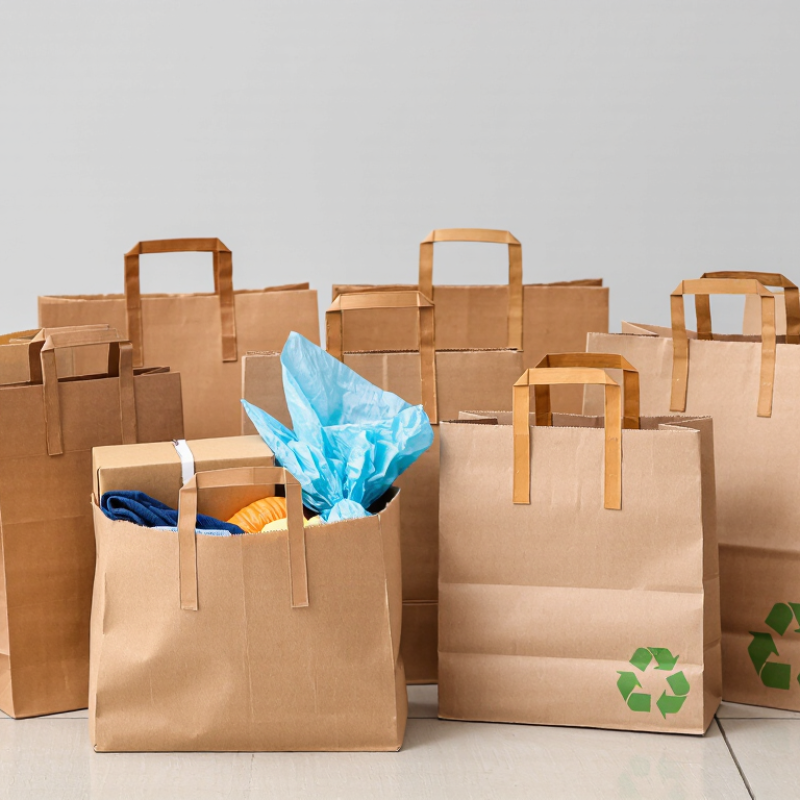
Large Paper Bag Types Used in Global Wholesale Markets
Large paper bags serve different wholesale jobs, and their construction matters more than appearance. Kraft shopping bags suit clothing, home goods, and takeaway retail. Their wide gussets help staff pack boxed products without crushing them. SOS bags stand upright and reduce packing time in supermarkets. Pinch-bottom bags offer stronger closures for heavier contents. Multiwall sacks handle powders, grains, and industrial materials when controlled filling is required.
Demand is moving toward fiber-based packaging. Smithers’ The Future of Paper Packaging to 2028 reports continued growth in paper packaging, supported by e-commerce, food distribution, and plastic reduction policies. Grand View Research estimates the global paper bags market will expand at roughly 4% annually through 2030. Large bags are only one segment, but wholesale buyers still need measurable specifications. Ask for basis weight, burst strength, handle attachment, moisture resistance, and pallet compression results. Numbers matter.
Not every “heavy-duty” bag performs equally. That is the uncomfortable part. A thick kraft layer can increase shipping weight without improving real protection. Buyers should request samples filled to the intended load, then test drops, stacking, and humidity exposure. EN 13432 may support compostability claims for suitable products, but certification must match the complete bag system. Recycled content can also vary between suppliers. Clear documentation, batch consistency, and independent test reports are more reliable than attractive samples. The best choice is often less obvious.
| No. | Large Paper Bag Type | Typical Flat Size or Dimensions | Typical Paper Basis Weight | Typical Load Capacity | Common Construction | Typical Wholesale Applications | Wholesale Buying Considerations |
|---|---|---|---|---|---|---|---|
| 1 | Kraft Grocery Carrier Bag | Approx. 180 × 100 × 240–320 mm | 70–100 gsm | 3–8 kg | Pinch-bottom or square-bottom construction; twisted paper or flat paper handles | Supermarkets, convenience stores, bakeries, takeaway food, and general retail | Select wet-strength paper or an internal barrier when the bag will hold chilled or moist products. |
| 2 | Large Square-Bottom Shopping Bag | Approx. 260 × 170 × 330–450 mm | 90–120 gsm | 6–12 kg | Self-standing square base with folded paper handles | Department stores, apparel, footwear, household goods, and gift retail | A wider gusset improves stability and helps accommodate boxed or irregular retail products. |
| 3 | Heavy-Duty SOS Paper Bag | Approx. 260 × 170 × 320–420 mm | 90–140 gsm | 8–15 kg | Self-opening satchel with a reinforced square bottom; usually handle-free | Grocery stores, produce, foodservice, pharmacies, and takeaway orders | A gusseted side panel and reinforced bottom are important for heavier food and household loads. |
| 4 | Wine and Bottle Paper Bag | Approx. 120 × 90 × 360–420 mm | 100–150 gsm | 2–6 kg | Narrow gusseted body with a reinforced base and strong loop or twisted-paper handles | Wineries, liquor retailers, gourmet food shops, hotels, and event packaging | The base must be tested for vertical bottle loads; internal dividers can reduce bottle-to-bottle contact. |
| 5 | Large Flat-Handle Paper Bag | Approx. 320 × 140 × 400–500 mm | 90–130 gsm | 6–12 kg | Reinforced folded-paper handles bonded to a rectangular gusseted body | Fashion retail, books, electronics accessories, shoes, and promotional distribution | Handle attachment and top-fold reinforcement should be checked through repeated lifting tests. |
| 6 | Extra-Large Takeaway Food Bag | Approx. 260 × 170 × 320–400 mm | 80–120 gsm | 5–10 kg | Wide square bottom with open top; may include ventilation holes or grease-resistant paper | Restaurants, catering, meal delivery, bakeries, and food pickup counters | For hot or greasy food, specify suitable food-contact paper and allow enough headspace for containers. |
| 7 | Paper Produce and Farm-Product Bag | Approx. 230 × 140 × 300–380 mm | 70–110 gsm | 4–10 kg | Gusseted kraft paper body, commonly with a reinforced or self-locking bottom | Farmers’ markets, produce retailers, bakeries, dry foods, and specialty grocery | Perforations can improve airflow, while moisture-resistant grades help with products that release condensation. |
| 8 | Industrial Multiwall Paper Sack | Approx. 400 × 700 to 500 × 900 mm | 2–4 paper plies; about 70–100 gsm per ply | 15–50 kg | Multi-ply kraft construction with sewn, pasted, or open-mouth closure | Cement, minerals, animal feed, grains, chemicals, fertilizers, and building materials | The number of plies, seam design, filling method, and product density determine the required strength. |
| 9 | Paper Mailer and E-Commerce Shipping Bag | Approx. 260 × 350 to 400 × 550 mm | 90–150 gsm | 1–5 kg | Reinforced kraft envelope with peel-and-seal closure; optional tear strip or return strip | Apparel, documents, books, small accessories, subscriptions, and online retail orders | Specify burst resistance, closure strength, and a suitable size range to minimize empty shipping space. |
| 10 | Large Promotional and Gift Paper Bag | Approx. 300 × 120 × 400–500 mm | 120–180 gsm | 4–10 kg | Rigid gusseted body with reinforced top edge, ribbon, cotton, or twisted-paper handles | Trade shows, conferences, premium retail, seasonal gifting, and corporate events | Higher grammage improves shape retention; matte or gloss coatings may affect recyclability and finishing cost. |



 WeChat QR
 WhatsApp QR