How to Choose Paper Carrier Bags for Your Business in 2026?
Choosing Paper Carrier Bags in 2026 requires more than selecting a fashionable colour or a low quoted price. The right bag must protect products, support the brand, and perform reliably during transport. A bakery may need grease-resistant paper and flat handles, while a clothing shop may require stronger twisted handles and wider gussets. Small details matter.
Packaging specialist Paul Jenkins, founder of The Bag Broker, offers a practical reminder: “A paper bag must protect the product, represent the brand, and earn its material cost.” This principle keeps purchasing decisions grounded. Review paper weight, recycled content, handle strength, bag dimensions, printing quality, and supplier consistency. Ask for samples. Test a full bag with real products, not empty showroom packaging. Then check how it feels after a rainy walk or a crowded commute.
There is no perfect bag.
A lower GSM option may reduce material use, but it can fail under heavy bottles. A thicker bag may perform better, yet create unnecessary cost and material demand. That tension deserves honest review. In 2026, responsible buyers should also examine credible fibre certifications, production transparency, minimum order quantities, and delivery reliability. Do not trust vague sustainability claims. Request evidence.
This guide explains how to compare Paper Carrier Bags with greater confidence. It focuses on practical performance, brand presentation, customer experience, and measurable environmental considerations. Some choices will remain imperfect. That is normal. The goal is not to find a flawless bag, but to choose one that genuinely fits the product, the business, and its daily use.
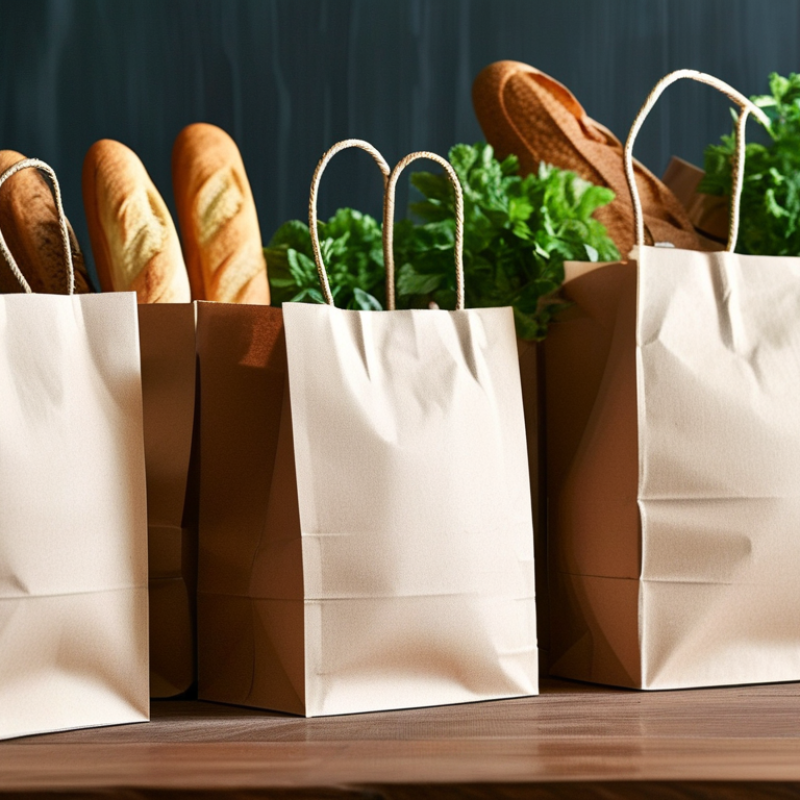
Understanding Your Business’s Paper Carrier Bag Requirements
How to Choose Paper Carrier Bags for Your Business in 2026?
Understanding Your Business’s Paper Carrier Bag Requirements
Choosing paper carrier bags starts with observing how customers use them. A bakery may need compact bags for warm pastries and small takeaway boxes. A clothing shop may require deeper bags with stronger handles. The right size reduces wasted paper and prevents products from shifting during transport.
Measure your typical items before requesting samples. Record their width, height, weight, and packaging shape. A bag holding two glass jars needs different construction from one carrying folded shirts. Paper weight matters, but thicker paper is not always better. It can increase cost, storage space, and handling difficulty. Test the handles with realistic loads, including short walks and sudden movement. A comfortable grip affects the customer’s experience.
Moisture resistance also deserves attention. Food businesses may face condensation, oil, or accidental spills. Ask suppliers for clear material specifications and test samples in daily conditions. Printing should remain readable after rubbing and folding. Check whether the selected paper and inks match your local packaging requirements. Reliable suppliers should provide technical documents, production details, and quality checks. Still, samples can mislead. A bag may perform well once but weaken after poor storage. Keep bags away from damp floors and direct sunlight. My own preference is not always the most practical choice. Staff feedback often reveals problems that measurements miss.
How to Choose Paper Carrier Bags for Your Business in 2026?
Understanding your business’s paper carrier bag requirements starts with selecting the right paper weight for the product load and usage frequency.
Paper weight is measured in grams per square metre (gsm). Lightweight 70 gsm paper is suitable for small, low-weight items, while 90–120 gsm paper offers a practical balance for retail and takeaway orders. Heavy-duty 150 gsm paper is more appropriate for heavier products or repeated handling. Final performance also depends on bag dimensions, handle construction, gusset size, and moisture exposure.
Evaluating Sustainability, Compliance, and Supplier Certifications
Choosing Paper Carrier Bags for Your Business in 2026
Sustainability claims should begin with evidence, not attractive wording.
Ask suppliers for fiber origin records, recycled-content verification, and chain-of-custody certification. Check whether certificates cover the exact factory and product line. A certificate alone proves little. The certificate’s scope, expiry date, and audit status matter. Also review inks, adhesives, handles, and coatings. These details can affect recyclability and food-contact suitability.
Compliance needs practical checking. Request current test reports for strength, migration, and restricted substances where relevant. Confirm that bag dimensions, labeling, and recycling instructions match your sales markets. Regulations can change, so old documents may create hidden risk.
In supplier reviews, I would also inspect batch traceability and complaint procedures. A reliable supplier should explain what happens after a failed test. Honest answers are more useful than perfect promises.
Tips:
Build a supplier scorecard with sustainability, compliance, and certification sections. Give each item clear evidence requirements. Visit the production site when order volumes justify it. If travel is difficult, request dated audit records and production photographs. Compare at least three suppliers. The cheapest quotation may become expensive after delays, retesting, or rejected deliveries. Keep a small sample archive, including handles, seams, and printed surfaces. Test it under real conditions, such as carrying glass jars on a rainy day. Some assumptions will be wrong. Review them before signing a long-term contract.
Selecting Printing, Branding, and Customization Options
Choosing paper carrier bags in 2026 requires more than selecting a size and adding a logo. Printing choices affect appearance, cost, and customer perception. Start with the bag’s purpose. A small white bag may suit boutique purchases, while a strong kraft bag handles heavier items. Check paper weight, handle strength, and base construction before approving artwork.
Keep branding readable from several steps away. Use one strong logo, clear contact details, and colors that match your existing identity. Dark ink usually performs well on kraft paper, but fine lines can disappear into its texture. White paper gives sharper color control. Ask for a physical proof. Digital screens often hide ink density problems.
Choose printing based on quantity and design complexity. Simple one-color printing can reduce production costs. Digital printing supports short runs and changing artwork. Offset printing may offer better consistency for larger orders. Discuss ink type, drying time, and print coverage with the supplier. Small details matter. Test the handle.
Customization can include gussets, reinforced bottoms, twisted or flat handles, and different finishes. A matte surface feels refined, while gloss can make colors appear stronger. Avoid adding every possible feature. Too much decoration may weaken the message and increase waste.
I once preferred a more detailed design, but the simpler proof looked more professional in real lighting.
Measure filled bags, not empty samples. Then check how the logo sits when the paper bends.
Calculating Costs, Ordering Quantities, and Delivery Timelines
How to Choose Paper Carrier Bags for Your Business in 2026?
Cost planning starts with the bag specification, not the unit price. Record size, paper weight, handle type, printing coverage, and packing method. A thicker bag may reduce tearing, but it can increase material and freight costs. Smithers’ The Future of Paper Packaging to 2028 identifies continued growth in paper-based packaging demand, which may increase pressure on pulp and converting capacity. Request at least three comparable quotations.
Calculate landed cost per bag. Include tooling, artwork preparation, cartons, transport, duties, and quality inspection. For example, 10,000 bags priced at $0.18 may become $0.25 after additional charges. That difference can change your margin. It is easy to miss.
Order quantities should match sales velocity and storage limits. Review the last twelve months of bag consumption, then add a safety stock of 10–15% for seasonal demand. However, this buffer is not universal. Over-ordering ties up cash and may create obsolete sizes after a packaging redesign. A small pilot order can test handle strength, print accuracy, and moisture resistance before full production.
Delivery timing needs a written production schedule. Allow time for sampling, approval, manufacturing, export handling, and local delivery. Drewry’s World Container Index shows that ocean freight rates can move sharply during capacity disruptions. Ask suppliers for separate production and transit estimates, not one vague lead time. Build two extra weeks into the plan. Sometimes, that still proves optimistic.
How to Choose Paper Carrier Bags for Your Business in 2026? - Calculating Costs, Ordering Quantities, and Delivery Timelines
2026 Paper Carrier Bag Cost and Delivery Planning Table
| Bag Size |
Typical Use |
Paper |
Order Quantity |
Bag Price |
Setup Cost |
Estimated Freight |
Estimated Total |
Landed Cost per Bag |
Production |
Transit |
Total Lead Time |
Small
26 × 14 × 32 cm |
Jewelry, takeaway items, small gifts |
90 gsm kraft |
1,000 |
$0.34 |
$75 |
$120 |
$535 |
$0.535 |
12–18 business days |
5–10 business days |
17–28 business days |
Small
26 × 14 × 32 cm |
Jewelry, takeaway items, small gifts |
90 gsm kraft |
5,000 |
$0.19 |
$75 |
$260 |
$1,285 |
$0.257 |
12–18 business days |
5–10 business days |
17–28 business days |
Medium
32 × 16 × 40 cm |
Clothing, cosmetics, boxed retail goods |
110 gsm kraft |
1,000 |
$0.42 |
$75 |
$145 |
$640 |
$0.640 |
12–18 business days |
5–10 business days |
17–28 business days |
Medium
32 × 16 × 40 cm |
Clothing, cosmetics, boxed retail goods |
110 gsm kraft |
5,000 |
$0.25 |
$75 |
$310 |
$1,635 |
$0.327 |
12–18 business days |
5–10 business days |
17–28 business days |
Large
45 × 17 × 48 cm |
Shoes, coats, large gift sets |
120 gsm kraft |
1,000 |
$0.58 |
$75 |
$180 |
$835 |
$0.835 |
12–18 business days |
5–10 business days |
17–28 business days |
Large
45 × 17 × 48 cm |
Shoes, coats, large gift sets |
120 gsm kraft |
5,000 |
$0.34 |
$75 |
$390 |
$2,165 |
$0.433 |
12–18 business days |
5–10 business days |
17–28 business days |
Calculation basis: Estimated total = bag price × order quantity + setup cost + estimated freight. Figures are planning benchmarks in USD for standard uncoated kraft bags with one-color printing, excluding taxes, duties, artwork changes, samples, storage, and expedited shipping. Actual quotations vary by destination, print coverage, handle type, packing method, and seasonal capacity.




 WeChat QR
 WhatsApp QR