Choosing the best Paper Grocery Bags from China requires more than comparing prices or attractive printing. Buyers should examine paper strength, handle construction, moisture resistance, factory experience, and quality control records. A reliable supplier should clearly explain paper grade, GSM, recycled content, production capacity, and testing procedures. These details matter when a customer carries glass jars, fresh vegetables, or several heavy cans through rain.
Packaging specialist Dr. Jonathan S. Huang observes, “A paper bag is only as dependable as its fiber, handle, and quality control.” His point is practical. A thick-looking bag can still tear at the handle. A cheaper material may also create higher replacement costs and customer complaints. Factory samples should be tested with realistic loads, repeated lifting, and short exposure to humidity. Ask for inspection photos, batch records, and transparent answers about raw-material sources.
Appearance still matters. A clean kraft surface, sharp printing, and steady folding can strengthen a retailer’s image. Yet design should not hide weak construction. That mistake happens.
China offers broad manufacturing capabilities, from simple flat-handle bags to custom luxury formats. However, supplier selection requires careful comparison. Certifications can support confidence, but they do not replace independent inspection. Buyers should also review communication speed, sample consistency, packaging protection, and delivery history.
The “best” Paper Grocery Bags are not always the thickest or cheapest. They are suitable for the intended load, climate, brand image, and budget. My own caution is simple: one successful sample proves very little. Consistent production proves much more.
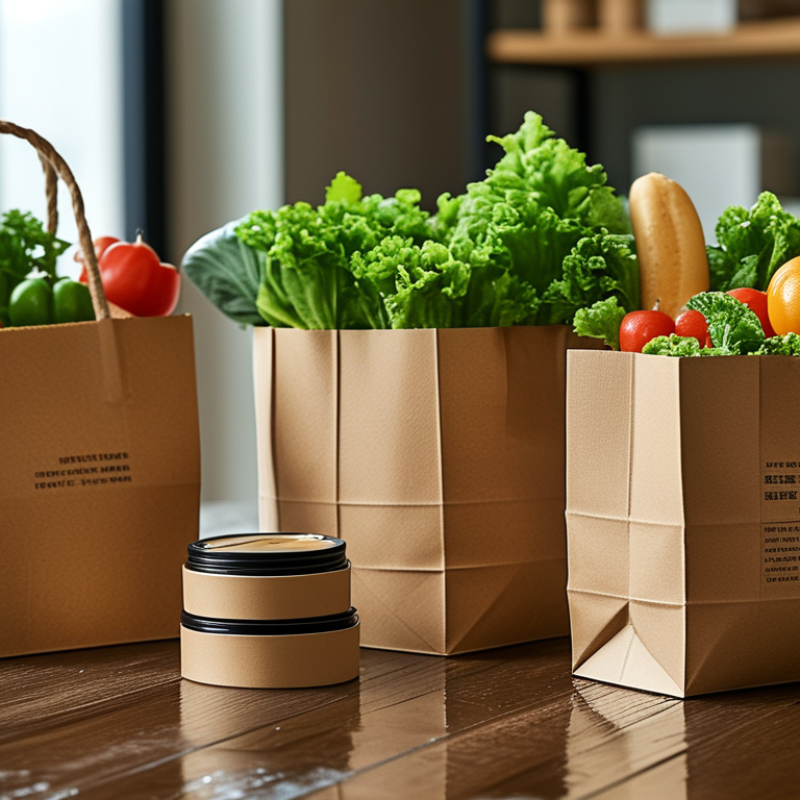
China manufactures several practical types of paper grocery bags, each suited to different shopping conditions. The most common is the kraft SOS bag, which uses a square bottom and folded side panels. It stands open at checkout and holds boxed food, bottles, and household goods. Flat-handle bags offer stronger carrying comfort, while twisted-handle bags provide a more polished appearance. Pinch-bottom bags remain useful for lighter groceries and takeaway items.
Material choice changes performance. Virgin kraft paper usually provides higher tear resistance, while recycled kraft supports lower-impact purchasing when fiber quality is controlled. The FAO reported global paper and paperboard production at approximately 416 million tonnes in 2022, showing the scale of the fiber supply chain. Grease-resistant paper is suitable for bakery items, but it may require treatments that affect recyclability. That detail deserves closer checking.
Chinese factories also produce laminated, printed, moisture-resistant, and custom-sized grocery bags. A 2024 Grand View Research report estimated the global paper bags market at over 5 billion US dollars in 2023, with continued growth expected through 2030. However, market growth does not guarantee bag quality. Buyers should request burst-strength, handle-pull, moisture, and dimensional tests from independent laboratories.
In practical inspections, weak bottom folds often cause more failures than thin paper. Samples should be loaded with real groceries, including cans and glass jars, before approval. Specifications look convincing on paper. Actual handling can disagree.
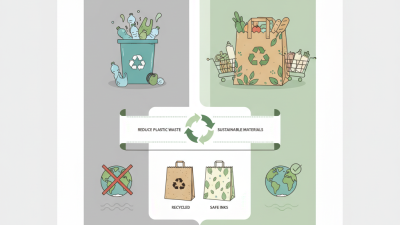
When comparing paper grocery bags from China, material choice deserves close inspection. Reliable suppliers specify kraft paper weight in grams per square meter, not simply “thick.” For everyday groceries, 80–120 GSM often balances carrying strength and material use. Moisture can still weaken the bag. Virgin kraft paper usually offers cleaner fibers and stronger tear resistance. Recycled kraft may reduce resource demand, but its strength can vary between batches. Ask for test data, not confident promises.
The bottom fold matters as much as paper weight. A wide gusset gives bulky items more room and reduces side-wall stress. Look closely at the base seam. It should use consistent adhesive coverage, even folding, and no visible gaps. Twisted paper handles feel comfortable, while flat handles may suit lighter loads. Reinforcement patches around handle attachments can prevent sudden tearing. I have seen attractive samples fail when filled with canned goods. The problem was not the paper alone. Weak handle bonding caused it.
Before a larger order, request samples from separate production lots. Measure the bag after folding, not only before production. Fill it with realistic items, including bottles, boxes, and produce. Check handle stretch, bottom stability, odor, print rub-off, and moisture response. A supplier that records batch details appears more dependable. Still, one successful sample proves little. Test results can change with humidity, glue application, or rushed production. That uncertainty deserves attention.
When evaluating Chinese paper bag suppliers, start with evidence, not attractive samples. The FAO’s Global Forest Products Facts and Figures 2023 reports approximately 423 million tonnes of global paper and paperboard production in 2023. This scale creates opportunities, but also uneven quality. Request production records, paper specifications, and recent test reports. Check basis weight, burst strength, tear resistance, handle pull strength, and moisture performance. A thick-looking bag may still fail after carrying cold groceries.
Supplier audits should examine the factory floor, not only the showroom. Confirm whether paper cutting, printing, folding, and handle attachment happen in-house. Ask for batch coding and retention samples. Independent laboratories accredited to ISO/IEC 17025 can verify strength, heavy metals, inks, and food-contact requirements. For recycled content, request traceable purchasing records. The Ellen MacArthur Foundation’s Global Commitment reports repeatedly identify unclear packaging claims as a barrier to circularity. Vague words like “eco” prove little.
Cost deserves careful attention. Compare pricing at the same dimensions, paper weight, handle type, order quantity, and delivery terms. Ask how the supplier manages moisture during container storage. A reliable factory should explain corrective actions, not hide defects. Yet inspection is never perfect. Production can change after approval, and one successful shipment proves limited consistency. I would therefore require pre-shipment inspection, random carton sampling, and written acceptance limits before placing a larger order.
The best paper grocery bag depends on your retail setting, product weight, and customer experience. A small bakery may need compact kraft bags with flat handles. A supermarket usually needs wider bases, stronger paper, and reinforced handle areas. For produce or boxed goods, moisture resistance matters. However, coated paper can affect recycling preferences in some markets. Choose carefully.
In my sampling experience, 100–120 GSM kraft paper suits light purchases, while heavier goods often require 140 GSM or more. A reinforced bottom adds stability, especially for glass jars or canned food.
I once underestimated handle comfort. The bag held the weight, but the thin twisted handles hurt customers’ hands. That detail changed the final specification. Ask Chinese suppliers for samples, load tests, printing proofs, and carton measurements before placing large orders. Check paper origin and production consistency, too. One uneven batch can damage a reliable retail image.
Tips:
Match bag size to your checkout products. Test each sample with real items. Inspect seams, handles, and bottom folds. Keep a few bags in a humid storeroom for practical testing. Request clear tolerances for dimensions, color, and weight. If your market has packaging rules, confirm the material and printing details with qualified local specialists. Fancy finishes look attractive, but simple recyclable designs may serve customers better.
What Are the Best Paper Grocery Bags from China?
Importing Chinese paper grocery bags requires more than comparing unit prices. The bag’s paper grade, handle strength, moisture resistance, and packing method affect the final cost. FAO’s 2023 Yearbook reported about 417 million tonnes of global paper and paperboard production in 2022. That scale supports competitive sourcing, but it also creates wide quality differences.
Ask suppliers for paper GSM, recycled content, adhesive details, and production tolerances. A practical specification might include 100–120 GSM kraft paper, reinforced handle patches, and a flat base. Confirm dimensions after folding, not only before production. Request a pre-production sample with your artwork. Check color under daylight. Small print shifts can become obvious across thousands of bags. Custom printing should also define ink coverage, barcode readability, and packaging counts per carton. ISO 2859-1 can guide acceptance sampling, while a simple load test can reveal weak handles. Fill samples with the intended goods, then lift them repeatedly. Real use is less forgiving.
Tips: Approve a sealed sample before mass production. Record carton quantity and bag weight. Inspect random cartons at loading. I once trusted a clean sample too quickly; the bulk shipment had softer paper after storage. That mistake was avoidable. Also, “compostable” should never be accepted without relevant test documents and local disposal guidance. Ask for moisture readings, inspection photos, and a written correction process before placing the order.
| Bag Type | Typical Paper Specification | Suitable Uses | Typical Load Range | Customization Options | Key Quality Checks | Importing Considerations |
|---|---|---|---|---|---|---|
| Flat-Handle Grocery Bag | Kraft paper commonly between 70 and 110 gsm; twisted or flat paper handles. | Supermarkets, convenience stores, takeaway food, and everyday retail purchases. | Approximately 3–8 kg, depending on paper weight, dimensions, and handle construction. | Bag size, kraft or white paper, one- to four-color printing, handle color, and recycled-paper content. | Check handle pull strength, bottom-fold accuracy, paper moisture, print registration, and seam adhesion. | Confirm carton dimensions, pallet quantity, moisture protection, and the agreed packaging standard before shipment. |
| Twisted-Handle Shopping Bag | Usually 100–160 gsm paper with machine-made twisted paper rope handles. | Clothing, gifts, specialty retail, bakeries, and heavier consumer goods. | Approximately 5–12 kg when the handle, gusset, and bottom are correctly matched. | Handle length, rope color, reinforced handle patch, matte or gloss coating, and custom artwork. | Test handle attachment, tear resistance around the patch, bag squareness, surface scuffing, and print clarity. | Higher paper usage and larger packed volume may increase freight cost; request a packed-carton sample. |
| SOS Square-Bottom Bag | Commonly 60–100 gsm kraft paper; self-opening square bottom without separate handles. | Groceries, produce, bakery items, quick-service food, and food-service counters. | Approximately 2–6 kg, depending on the base size and paper grade. | Printed logos or patterns, window panels, grease-resistant treatment, and multiple size options. | Inspect automatic opening, bottom stability, side-seam bonding, odor, cleanliness, and leakage resistance where applicable. | Food-contact use may require documentation for paper, inks, adhesives, and any functional coating. |
| Heavy-Duty Flat-Handle Bag | Often 110–170 gsm kraft paper with reinforced paper handles and a strengthened base. | Bottles, canned goods, household products, and large grocery orders. | Approximately 8–15 kg, subject to dimensions and a verified load test. | Multi-layer construction, reinforced base board, handle patch, custom dimensions, and high-coverage printing. | Perform static load testing, drop testing, handle-cycle testing, bottom burst testing, and dimensional inspection. | Ask for a written load specification rather than relying only on the paper gsm or visual appearance. |
| Recycled Kraft Paper Bag | Typically 80–140 gsm recycled kraft paper; appearance may include natural fiber variation. | Eco-positioned retail, grocery shopping, events, and general-purpose packaging. | Approximately 3–10 kg, depending on recycled fiber quality and bag construction. | Recycled content percentage, unbleached or bleached appearance, water-based inks, and certification documentation. | Verify recycled-content records, tensile strength, color consistency, odor, dust, and wet-strength performance. | Environmental claims should be supported by relevant test reports or certification documents required by the destination market. |
| Grease-Resistant Food Bag | Usually 40–80 gsm paper with a grease-resistant treatment or suitable inner paper layer. | Prepared food, fried food, pastries, sandwiches, and bakery products. | Approximately 0.5–3 kg, depending on the paper structure and bag size. | Food-safe printing, ventilation holes, folded tops, custom windows, and portion-specific dimensions. | Check grease resistance, odor transfer, ink rub-off, seal integrity, migration documentation, and cleanliness. | Confirm compliance requirements for the destination country before approving materials for direct food contact. |
| Premium Rope-Handle Paper Bag | Commonly 180–250 gsm paper or laminated paperboard with cotton, paper, or synthetic rope handles. | Premium retail, gift packaging, promotional campaigns, and high-end product presentation. | Approximately 5–15 kg, depending on the handle system and reinforced structure. | Embossing, foil stamping, spot coating, custom rope handles, inserts, magnetic closures, and rigid bases. | Inspect handle knots, eyelet strength, surface finish, color accuracy, corner condition, and rub resistance. | Finishing processes can extend production time; approve a pre-production sample before mass manufacturing. |
| Custom Printed Paper Grocery Bag | Paper weight and structure selected according to bag dimensions, artwork coverage, and intended load. | Retail campaigns, seasonal packaging, private-label grocery programs, and promotional distribution. | Approximately 2–15 kg, based on the selected construction and verified test results. | Custom size, artwork, colors, handles, coatings, windows, gussets, packaging units, and barcode labels. | Approve color proofs, conduct AQL-based visual inspection, measure dimensions, and test load, seams, handles, and moisture condition. | Define tolerances, inspection timing, carton markings, shipping terms, documentation, and acceptable defect limits in the purchase order. |
The specifications and load ranges shown are typical planning ranges rather than universal guarantees. Final performance depends on paper quality, bag dimensions, handle design, adhesive, printing or coating processes, packing method, and independent pre-shipment testing.