Choosing the right Paper Wine Bags can shape a wholesale buyer’s margins, brand image, and customer experience. A bag may look elegant in a product photograph, yet fail when a heavy bottle strains its handles. That small detail matters.
Packaging journalist and industry expert Lisa McTigue Pierce has written, “Packaging must protect the product and communicate its value.” This principle guides our selection of ten leading options for wholesale buyers. Each choice deserves practical inspection, not attractive claims alone. We consider paper weight, bottle fit, handle construction, print quality, recycled content, minimum order quantities, and delivery consistency.
Details matter.
A sturdy twisted-paper handle should feel secure in the hand. A reinforced base should remain flat on a retail counter. Kraft paper can create a warm, natural impression, while coated surfaces may deliver sharper colors and better splash resistance. However, coatings can complicate recycling and increase costs. The cheapest option is rarely the most efficient one.
Wholesale decisions also involve storage space, seasonal demand, and supplier communication. A beautiful bag with unpredictable lead times can create serious pressure before holidays or promotional events. We have included those uncomfortable trade-offs instead of presenting every product as perfect. Some bags may need stronger specifications, while others may suit lighter bottles and shorter carrying distances.
This guide compares the top ten Paper Wine Bags through a buyer’s lens. It aims to support clearer purchasing decisions, realistic quality checks, and fewer expensive surprises. Nevertheless, local testing remains wise. Wine bottles vary. So do customer expectations.
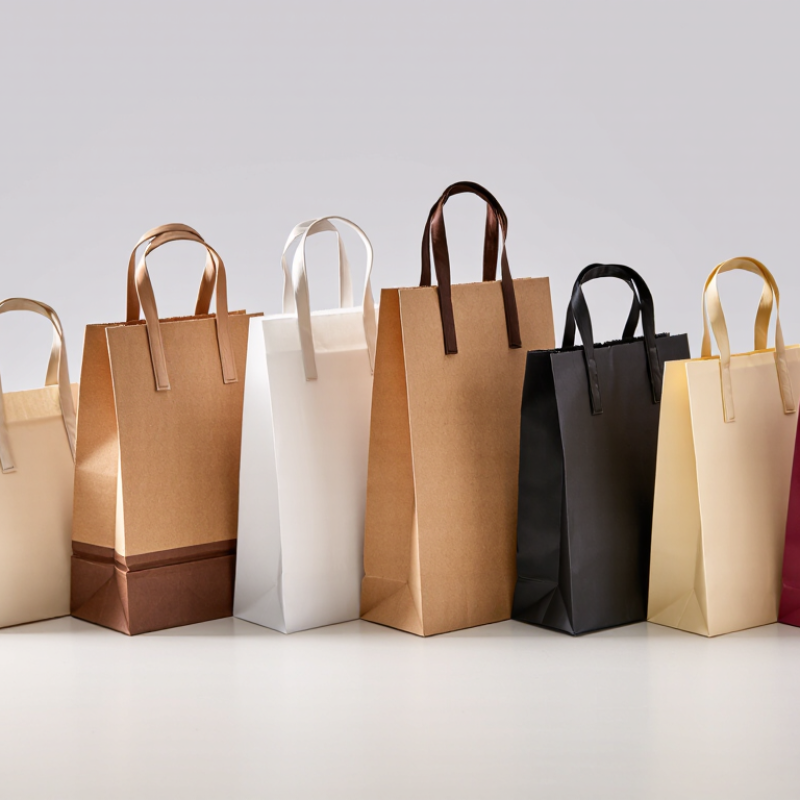
For wholesale buyers, a high-quality paper wine bag begins with controlled performance, not attractive printing. The handle must carry a filled 750-milliliter bottle without stretching, tearing, or hurting fingers. A reinforced base matters because glass concentrates weight in one small area. During inspections, I check glued seams, fold accuracy, paper grain, and moisture resistance. Small defects become expensive returns.
Material choice should match the sales environment. A 170–210 gsm kraft paper body often balances stiffness, printability, and shipping cost. Bottle shape can change that requirement. The bag should hold its form after brief contact with condensation. Smithers’ The Future of Global Packaging to 2028 forecasts packaging demand above US$1 trillion. This highlights the importance of scalable, consistent converting. The report does not make every paper bag good. Production discipline does.
Sustainability claims need evidence. The European Paper Recycling Council reported an 82.5% paper recycling rate in Europe during 2022. However, recyclability depends on coatings, inks, handles, and local collection systems. Ask for fiber sources, test records, weight tolerances, and carton-level inspection data. Certified fiber may support responsible sourcing, yet certification cannot prove handle strength. A perfect bag is a useful fiction. Wholesale teams should test samples across batches, not approve one attractive prototype. Glossy laminates may look premium, sometimes. A simpler finish can reduce material complexity and support recycling.
Quality benchmark based on the practical factors wholesale buyers commonly evaluate: durability, material performance, sustainability, presentation, and logistics efficiency.
The weighted scores represent the relative importance of each quality criterion in a wholesale purchasing decision. Structural strength, paper specification, and handle reliability receive the highest weighting because they directly affect product protection, customer experience, and return risk.
When comparing the top paper wine bag designs, wholesale buyers should inspect more than appearance. A useful design must protect the bottle, support efficient packing, and present a consistent retail image. During sample reviews, I check the bag’s base, handles, seams, and paper stiffness. Small weaknesses become expensive at scale.
Start with structure. Compare flat-bottom and gusseted designs using the same bottle size. A reinforced base should remain stable on a counter. Handles should feel comfortable after repeated lifting. Test them with filled bottles, not empty samples. Then examine paper weight, coating, and print clarity. A thicker paper may feel premium, but it can increase shipping volume. That trade-off is easy to miss.
Measure each sample carefully. Record height, width, handle length, and usable interior space. Check whether the opening accepts a bottle without scraping the rim. Moisture resistance also matters during transport, although excessive coating can affect recyclability. Ask suppliers for material specifications, production tolerances, and quality inspection records. A clear replacement policy adds confidence. I would also request pre-production samples before placing a large order. Photos can hide uneven folds. They often do.
Design details influence handling speed. A wide opening helps staff pack quickly, while reinforced handles reduce customer complaints. Color consistency should be checked under natural light. Metallic effects may look attractive, but they can vary between production batches. Compare at least three samples side by side. The cheapest option is not always the most reliable. Sometimes, the simplest bag performs best.
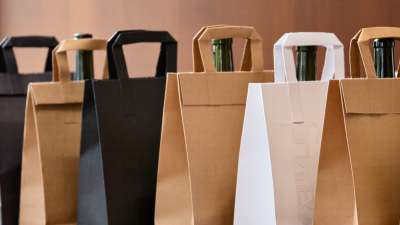
Wholesale wine buyers should match paper bags to the bottle, not only to the price. A 250–350 gsm kraft bag suits standard 750 ml bottles and offers reliable rigidity. Recycled kraft reduces virgin fiber use, but its surface may look less uniform. White kraft supports sharper printing for premium labels. For heavier bottles, choose reinforced gussets, a folded base, and twisted paper handles. Double-bottle bags need stronger side seams. Tall narrow bags protect sparkling wine bottles, while wider formats fit boxed or unusually shaped products. Flat-handle bags usually reduce cost. Cotton-style paper handles feel more refined. Water-resistant coatings help chilled bottles, but plastic films can weaken recyclability.
The International Organisation of Vine and Wine reported global wine consumption at about 214 million hectolitres in 2024. That scale makes material efficiency commercially important. The Global Recycling Foundation reports that paper can be recycled several times, although fibers eventually shorten. Therefore, buyers should request recycled-content percentages and test bag strength after moisture exposure. The bag should carry weight safely, not merely look sustainable. I still question vague “eco” claims without supplier documentation.
Tips: Test ten filled bags for 24 hours. Check handle twisting, base swelling, and print transfer. Ask for FSC-certified fiber where suitable, but verify the certificate scope. Avoid excessive lamination when recyclability matters. For gift wines, add tissue paper or molded inserts instead of making the outer bag unnecessarily thick. Regional recycling rules differ, so confirm disposal guidance before ordering large volumes.
Top 10 Paper Wine Bags for Wholesale Buyers?
For wholesale buyers, customization should begin with the product, not the artwork. Measure each bottle, including its shoulder and closure, before choosing bag dimensions. A snug fit reduces movement during delivery. Request a physical sample with the intended handle, base, and print colors. Digital proofs often hide small alignment problems. Check minimum order quantities, repeat-order consistency, and production lead times. A cheaper custom bag can become expensive after rejected cartons.
Sustainability needs evidence. Ask for recycled fiber content, responsible-fiber documentation, and ink details. Paper bags are not automatically sustainable. Heavy coatings, plastic windows, and mixed materials may complicate recycling. A simple kraft surface may perform better environmentally, though it can show scuffs more clearly. That trade-off matters. Suppliers should explain their material specifications in writing, not through vague claims.
Durability should be tested with filled bottles, not empty samples. Examine the base fold, side seams, and handle attachment points. Load each bag beyond its normal weight for a short holding test. Then inspect it after carrying and stacking. Moisture resistance also matters around chilled bottles and warehouse floors. A bag that survives one lift may still fail at the bottom seam. Color variation between production batches is another practical weakness. Leave room for improvement in the specification, because real handling is rarely as clean as a factory sample.
| No. | Bag Profile | Paper Construction | Typical Size | Customization Options | Sustainability Indicators | Durability Factors | Recommended Verification | Indicative MOQ | Typical Lead Time | Overall Fit / 10 |
|---|---|---|---|---|---|---|---|---|---|---|
| 1 | Premium Kraft Bottle Bag | 180–220 gsm kraft paper with folded base | 14 × 8 × 39 cm | Flexographic or offset printing; twisted-paper handles; custom color matching; optional foil or embossing | Recyclable paper structure; water-based ink option; plastic-free handle option | Reinforced top fold; glued or taped base; suitable for one standard 750 ml bottle | Paper weight, handle pull test, base compression test, ink and coating documentation | 500–1,000 pcs | 15–25 working days | 9.3 |
| 2 | Recycled Brown Kraft Bag | 100% recycled kraft paper, commonly 170–200 gsm | 14 × 8 × 39 cm | One- to four-color print; natural brown background; paper or cotton handles; simple die-cut options | High recycled content; recyclable; unbleached appearance; low-ink designs reduce material impact | Good for regular retail use when the base is reinforced; lower tear resistance than virgin-fiber paper at equal weight may occur | Recycled-content claim, fiber traceability, wet-strength performance, load testing | 1,000 pcs | 15–25 working days | 9.0 |
| 3 | White Kraft Gift Bag | 180–210 gsm bleached kraft paper | 14 × 8 × 39 cm | Full-color printing; photographic graphics; gloss or matte water-based coating; ribbon or cotton handles | Recyclable when uncoated or water-based coated; virgin paper can provide consistent print quality | Smooth surface and firm structure; handles and bottom reinforcement should be specified for bottle weight | Coating recyclability, paper sourcing, handle attachment strength, migration requirements for intended use | 1,000–2,000 pcs | 20–30 working days | 8.8 |
| 4 | Two-Bottle Wine Carrier | 200–250 gsm kraft paper with internal divider | 24 × 9 × 39 cm | Logo printing; divider configuration; reinforced handles; custom insert and seasonal artwork | Paper divider can replace plastic separators; recyclable if adhesives and coatings are compatible | Internal divider reduces bottle contact; requires tested base strength and balanced handle attachment | Two-bottle load test, drop test, divider fit, handle pull test and dimensional inspection | 1,000 pcs | 20–30 working days | 8.7 |
| 5 | Flat-Handle Retail Bag | 150–190 gsm kraft paper with flat paper handles | 14 × 8 × 39 cm | Cost-efficient logo printing; custom handle color; standard die-cut sizes; barcode-ready artwork | Paper-only construction is widely recyclable; efficient flat storage can reduce shipping volume | Adequate for short retail carrying periods; bottom and handle attachment are the main stress points | Handle pull test, seam inspection, base load test and print rub resistance | 500–1,000 pcs | 12–20 working days | 8.5 |
| 6 | Luxury Rigid-Style Paper Bag | 250–300 gsm paperboard or laminated paper construction | 15 × 9 × 40 cm | Premium offset printing; embossing; debossing; foil details; magnetic or ribbon-style presentation features | Can be recyclable if made without inseparable plastic film and excessive mixed materials; higher material use than standard bags | High stiffness and strong visual presentation; heavier construction increases shipping weight | Material separation, coating type, handle strength, box or bag compression test | 1,000–2,000 pcs | 25–35 working days | 8.4 |
| 7 | Water-Resistant Kraft Bag | 180–220 gsm kraft paper with water-based dispersion coating | 14 × 8 × 39 cm | Custom print; matte or satin finish; optional reinforced base; multiple handle choices | Water-based coating may be preferable to plastic lamination; recyclability must be confirmed with the local paper system | Improved resistance to light moisture and scuffing; not intended for immersion or prolonged wet exposure | Coating composition, repulpability or recyclability evidence, wet-load test and abrasion test | 1,000 pcs | 20–30 working days | 8.3 |
| 8 | Windowed Wine Bag | 180–220 gsm kraft paper with cellulose or clear film window | 14 × 8 × 39 cm | Die-cut viewing window; printed graphics; custom window shape; paper handle options | Paper window or certified compostable film can improve end-of-life options; mixed materials may complicate recycling | Good presentation value; window area and adhesive seam require additional tear and load testing | Window material, recyclability or compostability evidence, seam strength and bottle-load testing | 2,000–3,000 pcs | 25–35 working days | 8.0 |
| 9 | Bottle-and-Accessory Bag | 200–250 gsm kraft paper with separate accessory compartment | 18 × 10 × 40 cm | Compartment layout; custom insert; logo printing; gift-card pocket; handle and closure choices | Paper inserts can replace plastic trays; larger size uses more paper and should be optimized for the product assortment | Suitable for a bottle plus corkscrew, glassware or gift items when the compartment and base are load-tested | Internal partition fit, total load test, handle pull test and edge-crush inspection | 1,000–2,000 pcs | 25–35 working days | 7.9 |
| 10 | Compact Single-Bottle Sleeve | 140–180 gsm kraft paper sleeve with reinforced end panels | 13 × 8 × 38 cm | Minimalist print; die-cut handle; custom fit for bottle shape; low-coverage artwork | Uses less material than a full handled bag; typically recyclable when free from plastic laminate | Lightweight and space-efficient; best for short-distance carrying and standard bottle dimensions | Bottle-fit tolerance, edge-tear resistance, end-panel strength and carrying test | 500–1,000 pcs | 12–20 working days | 7.8 |
Evaluation basis: customization flexibility, paper and coating choices, recyclability considerations, structural performance, quality-control requirements, indicative wholesale order quantities, and standard production timelines. Dimensions and specifications are typical industry ranges for 750 ml wine-bottle packaging and should be confirmed with pre-production samples.
A sample should come before any large purchase. Fill the bag with a standard wine bottle, then carry it for several minutes. Check the handle attachment, bottom fold, and side seams. A neat appearance means little if the bag fails under weight. Ask for the paper weight, usually listed in grams per square metre. Thicker paper often feels safer, but it can raise shipping costs. Choose dimensions that hold the bottle firmly without forcing the sides outward.
Moisture resistance deserves close attention. A damp shop counter can weaken untreated paper quickly. Request details about coatings and confirm whether the surface remains suitable for recycling in your target market. Inspect printing for uneven color, smearing, and poor alignment. Small flaws multiply across thousands of units. Request a pre-production proof. It may slow the order, but it can prevent expensive rework. I have found that “standard size” is not always standard between factories.
Review the quotation beyond the unit price. Confirm the minimum order quantity, carton count, packing method, production time, and replacement policy for defects. Ask how random inspections are performed and whether inspection photos are available before shipment. Calculate landed cost, including freight and possible storage. Keep a written specification sheet with measurements, handle length, paper grade, and artwork approval. One detail is easy to miss. The safest order is not always the cheapest one; it is the one with fewer surprises.