Leave Your Message

What Are the Top 10 Large Paper Bags Suppliers?

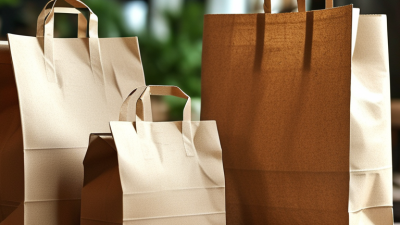
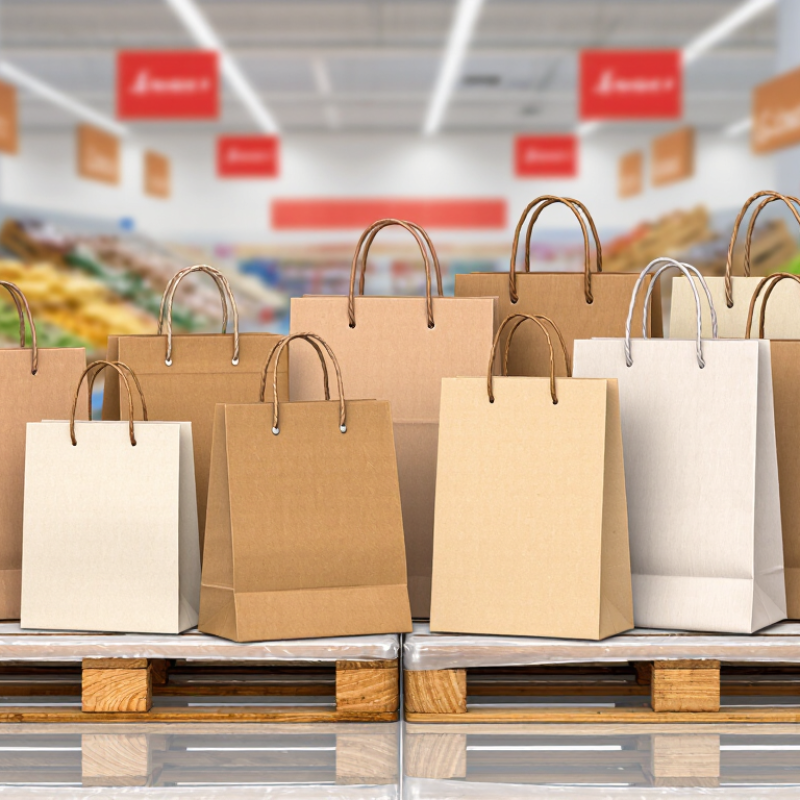
Large Paper Bags are becoming more visible in retail, food service, agriculture, and industrial packaging. Their wider bodies can carry shoes, groceries, apparel, and boxed products without immediate tearing. That practical value matters. So does material efficiency.

Grand View Research estimates that the global paper bags market reached approximately USD 5 billion in 2023. Its report also projects steady growth through 2030, supported by retail demand and pressure to reduce conventional plastic packaging. Smithers reports similar momentum across sustainable packaging, especially where paper-based formats can use recycled fibre and efficient printing. However, market definitions vary. Some reports include small takeaway sacks, while others separate industrial and heavy-duty bags. The comparison is not perfectly clean.

Jori Ringman, Director General of the Confederation of European Paper Industries, has said, “Paper packaging is part of the solution for a circular economy.” That statement deserves careful interpretation. A paper bag is not automatically sustainable. Fibre sourcing, coating, adhesive choice, transport distance, and recycling access all influence its real impact. A thick bag may look stronger, yet use more material than necessary. A cheaper supplier may also create higher waste through weak handles or inconsistent sizing.

This guide examines the top 10 Large Paper Bags suppliers through production capacity, customization, certifications, order flexibility, and delivery reliability. It also considers practical details, such as reinforced bottoms, twisted handles, moisture resistance, and pallet protection. The ranking cannot remove every uncertainty. It can make supplier decisions more transparent.
What Are the Top 10 Large Paper Bags Suppliers?

Understanding Large Paper Bags and Their Main Uses

Large paper bags are sturdy containers made for carrying bulky or multiple items. They usually feature wide bases, reinforced seams, and twisted or flat handles. Common sizes range from grocery formats to bags large enough for folded clothing, bedding, or takeaway orders. Paper weight affects strength, while the base design controls balance. Handles matter too. A practical supplier should explain load limits, paper thickness, and storage conditions clearly. Sample testing helps reveal weak seams before regular purchasing begins.

Retail stores use large paper bags for coats, shoes, household goods, and gift purchases. Food businesses may use them for boxed meals, bakery trays, or several lightweight containers. Their broad surfaces also provide useful space for simple labels or printed instructions. In warehouses, larger bags can hold packing materials, craft supplies, or sorted merchandise. They are not waterproof. Moisture can weaken the paper quickly, especially around the bottom folds.

Reliable sourcing requires more than comparing unit prices. Buyers should check recycled content, handle attachment, production consistency, and packaging during transport. Asking for test samples is sensible. I have found that an attractive bag can still fail when overloaded. That is an easy detail to overlook. Suppliers should also provide clear measurements, tolerance ranges, and handling guidance. Large bags may reduce plastic use, but they are not automatically suitable for every product or climate.
What Are the Top 10 Large Paper Bags Suppliers?

Understanding Large Paper Bags and Their Main Uses

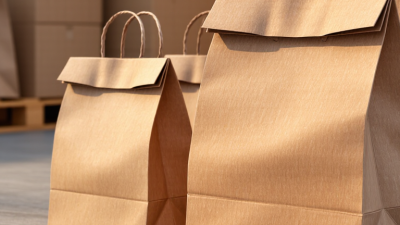
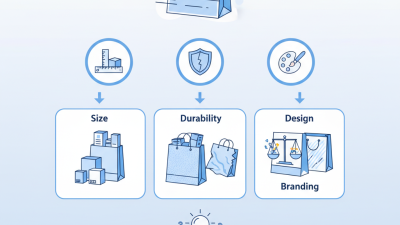
Large paper bags are commonly produced from kraft paper and are used for grocery shopping, takeaway food, agriculture, pet food, cement, chemicals, retail packaging, and industrial materials. Supplier selection typically depends on paper strength, bag construction, handle type, printing capability, food-contact requirements, customization, and order volume. The chart compares the main application sectors by their typical demand importance in large-paper-bag procurement, without identifying individual companies or brands.

Criteria for Evaluating Large Paper Bag Suppliers

When comparing the top 10 large paper bag suppliers, start with verified production experience. Ask for samples showing seam strength, handle durability, and performance under realistic loads. A supplier should provide bag dimensions, paper grammage, moisture resistance, and tested weight limits. Factory audits matter too. Photos alone are not enough.

Material transparency deserves close attention. The supplier should identify fiber sources and provide current chain-of-custody documentation when requested. The CEPI Annual Statistics 2023 reported European paper and board production at about 79.5 million tonnes, showing the scale of this manufacturing sector. Scale, however, does not guarantee consistent quality. Check batch records, recycled content claims, ink specifications, and recovery guidance. Claims can sound greener than they are.

Delivery reliability is equally practical. Review average lead times, minimum order quantities, replacement procedures, and capacity during seasonal demand. The World Bank estimates global municipal waste could reach 3.4 billion tonnes annually by 2050. Better packaging design cannot solve that problem alone, but recyclable paper structures may support waste reduction when local systems accept them. Request independent test reports, such as those related to ISO 18606 or relevant regional packaging standards. A supplier that refuses reasonable evidence is difficult to evaluate.

My own caution is simple: the cheapest quotation often excludes testing, freight changes, or rejected batches. That lesson is easy to overlook.

Profiles of the Top 10 Large Paper Bag Suppliers

The top 10 large paper bag suppliers differ in capacity, materials, and service depth. This profile compares them through production experience, quality controls, customization, and delivery reliability. The ranking should be treated as practical guidance, not a permanent verdict. Factory performance can change with equipment, staffing, and material costs.

The first supplier focuses on heavy-duty kraft bags for groceries and warehouse use.

The second offers wide-mouth bags with reinforced handles and stable bases.

The third serves food businesses with grease-resistant paper options.

The fourth specializes in recycled fibers, though its color range is somewhat limited.

The fifth supports short production runs, making it useful for seasonal packaging.

The sixth operates high-speed lines and handles large recurring orders efficiently.

The seventh provides detailed printing control, including sharper small text.

The eighth emphasizes moisture-resistant coatings, but buyers should verify recycling compatibility.

The ninth develops custom sizes for clothing, books, and household goods.

The tenth combines moderate pricing with flexible sampling and responsive communication.

In supplier evaluations, request material certificates, sample measurements, and recent inspection records.

Check whether the stated bag capacity matches real product weight. A filled sample on a warehouse floor reveals more than a polished catalog.

Ask about handle pull strength, seam consistency, odor, and carton protection.

Delivery estimates also need scrutiny. A low unit price may hide expensive freight or high minimum quantities.

Some suppliers communicate well before payment but respond slowly after approval. That weakness deserves attention.

Buyers should compare at least three samples under identical conditions. Performance matters more than impressive claims.

Comparing Product Range, Quality, Capacity, and Service

Choosing among the top ten large paper bag suppliers requires more than checking annual output. Product range matters when one project needs flat-handle bags, twisted-handle bags, kraft sacks, or custom sizes. During supplier reviews, I examine paper weight, handle strength, printing accuracy, and fold consistency. A useful range should support retail, food service, industrial, and promotional applications without forcing unsuitable substitutions.

Capacity is not everything. A factory may advertise high monthly production but lack reliable finishing equipment during peak seasons. Buyers should request sample batches, production lead times, defect rates, and backup material plans. Quality evidence includes paper sourcing records, load testing, moisture checks, and documented inspections. Suppliers with controlled processes usually deliver cleaner edges and fewer broken handles. Small details matter.

Service shows later. Responsive suppliers clarify artwork files, carton counts, shipping schedules, and replacement policies before production begins. Dedicated technical staff can prevent costly sizing mistakes, especially for bags with reinforced bases or heavy contents. Larger suppliers often provide stronger logistics support, yet some become slow when handling smaller orders. That trade-off deserves attention. My own preference is a supplier that reports problems early, even when the report is uncomfortable. No factory is perfect, and polished samples can hide inconsistent bulk production. Comparing ten suppliers through identical specifications, trial orders, and written performance records creates a more reliable assessment.

What Are the Top 10 Large Paper Bags Suppliers? - Comparing Product Range, Quality, Capacity, and Service
Supplier Profile Product Range Paper and Construction Typical Large-Bag Size Load Range Monthly Capacity Quality Controls Typical MOQ Lead Time Service Capability
Supplier Profile 01 Flat-handle shopping bags, twisted-handle bags, SOS bags, and custom printed large bags 70–120 gsm kraft paper; glued construction; reinforced handle patches 320 × 170 × 430 mm to 450 × 180 × 520 mm 8–15 kg 6–8 million bags High
Inline print inspection and handle pull testing
10,000 pieces 25–35 days Strong
Artwork support and pre-production samples
Supplier Profile 02 Heavy-duty grocery bags, bakery bags, takeaway bags, and wide-bottom paper bags 80–150 gsm kraft paper; square-bottom construction; optional moisture-resistant coating 300 × 180 × 400 mm to 460 × 220 × 560 mm 10–20 kg 4–6 million bags High
GSM, moisture, seam, and dimensional checks
15,000 pieces 30–40 days Strong
Packaging optimization and export documentation
Supplier Profile 03 Large retail bags, luxury paper bags, ribbon-handle bags, and rigid-handle bags 100–250 gsm coated or uncoated paper; laminated options; reinforced top edge 350 × 140 × 450 mm to 500 × 200 × 600 mm 8–18 kg 2–4 million bags Premium
Color matching, crease inspection, and load testing
5,000 pieces 35–50 days Very strong
Sampling, color approval, and custom finishing
Supplier Profile 04 Unprinted kraft bags, industrial paper sacks, produce bags, and bulk packaging bags 70–110 gsm recycled kraft paper; multi-ply options; stitched or glued seams 280 × 160 × 380 mm to 450 × 220 × 600 mm 10–25 kg 8–12 million bags Consistent
Basis-weight, tensile-strength, and seam checks
20,000 pieces 20–30 days Reliable
Repeat-order planning and palletized shipment
Supplier Profile 05 Food-service bags, large lunch bags, delivery bags, and grease-resistant paper bags 60–100 gsm kraft or bleached paper; food-contact coating options 260 × 150 × 350 mm to 400 × 180 × 500 mm 5–12 kg 5–7 million bags High
Food-contact documentation and coating uniformity checks
10,000 pieces 25–40 days Strong
Food-packaging compliance support
Supplier Profile 06 Large promotional bags, event bags, kraft shopping bags, and custom logo bags 80–170 gsm kraft or art paper; offset, flexographic, or digital printing 300 × 120 × 400 mm to 450 × 180 × 550 mm 6–15 kg 3–5 million bags Good
Print registration and handle-strength testing
3,000 pieces 30–45 days Flexible
Low-volume sampling and artwork revision
Supplier Profile 07 Recyclable retail bags, recycled-content bags, reusable paper bags, and FSC-certified options 80–140 gsm recycled or FSC-certified kraft paper; water-based inks 320 × 160 × 420 mm to 460 × 200 × 560 mm 7–16 kg 2–4 million bags High
Recycled-content verification and print-quality checks
8,000 pieces 30–45 days Strong
Sustainability documents and material traceability
Supplier Profile 08 Extra-large shopping bags, garment bags, shoe bags, and department-store bags 100–180 gsm kraft or coated paper; reinforced bottom and handle system 400 × 180 × 500 mm to 600 × 250 × 750 mm 12–25 kg 1.5–3 million bags High
Bottom-load testing and dimensional inspection
5,000 pieces 35–55 days Specialized
Large-format engineering and packing advice
Supplier Profile 09 Paper sacks, pet-food bags, garden-product bags, and valve-bottom industrial bags 70–100 gsm multi-ply kraft paper; glued, stitched, or valve-bottom formats 300 × 100 × 500 mm to 500 × 150 × 900 mm 15–30 kg 5–9 million bags High
Drop, burst, seam, and filling-line compatibility tests
20,000 pieces 30–45 days Technical
Filling trials and industrial packaging support
Supplier Profile 10 Custom large paper bags, seasonal packaging, gift bags, and mixed-size retail programs 70–200 gsm kraft, recycled, or coated paper; multiple handle and finish options 300 × 150 × 400 mm to 550 × 220 × 700 mm 8–22 kg 3–6 million bags Good
Pre-shipment inspection and random carton sampling
5,000 pieces 30–50 days Flexible
Multi-SKU coordination and consolidated delivery

Note: Capacity, MOQ, dimensions, load ratings, and lead times are representative supplier-benchmark ranges for large paper-bag manufacturing and should be verified against a supplier’s current quotation, technical specification, and quality documentation.

How to Select the Right Large Paper Bag Supplier

Selecting among the top 10 large paper bag suppliers requires more than comparing unit prices. Start with bag dimensions, load weight, handle type, and monthly volume. A supplier should provide samples using the same kraft paper grade and construction planned for production. Test them with real products, not empty cartons. Weak handles fail quickly.

Grand View Research valued the global paper bags market at approximately USD 5.4 billion in 2023 and projected continued growth through 2030. This expansion increases supplier choice, but also makes quality differences easier to overlook. Ask for documented paper basis weight, recycled content, moisture resistance, and batch-testing procedures. The Forest Stewardship Council’s chain-of-custody model can also support responsible fiber sourcing, although certification alone does not prove strong manufacturing performance.

Delivery reliability deserves a separate score. Review at least twelve months of on-time shipment records, minimum order quantities, tooling fees, and replacement policies. Request test reports for handle strength and bottom-seam performance. A supplier may offer an attractive quotation while quietly adding setup costs. I have seen buyers ignore pallet dimensions, then lose warehouse space and shipping efficiency. Measure twice. Also check whether the supplier can maintain color, printing alignment, and dimensions across repeat orders. A polished sample can mislead. Keep a small trial order before signing a long contract, because practical evidence is often more useful than confident sales claims.