Top 10 Small Paper Bags in China You Need to Know?
In the rapidly growing market of packaging, Small Paper Bags have become increasingly important. They combine convenience with sustainability, attracting a wide range of consumers. Renowned industry expert Dr. Emma Lin, a packaging specialist, states, "Small Paper Bags are a testament to our commitment to eco-friendly solutions." Her insights reflect a larger trend toward sustainable packaging in China.
China's small paper bag industry has evolved significantly. These bags serve diverse purposes, from retail to events. They are essential for brands aiming to reduce their environmental footprint. Consumers are more conscious of their choices. They prefer packaging that is both functional and environmentally friendly. This shift impacts how brands design their packaging.
However, not all small paper bags meet the standards of quality and sustainability. Brands must be vigilant. The challenge lies in balancing cost with eco-credentials. Companies should focus on sourcing materials responsibly. This industry is still maturing and requires continuous improvement. Small Paper Bags hold tremendous potential, but growth comes with responsibility.

Top 10 Small Paper Bags: Overview of the Market in China
The small paper bag market in China has witnessed significant growth. This rise is driven by increasing demand for eco-friendly packaging. More consumers prefer sustainable options, leaving behind plastic bags. Small paper bags are ideal for retail and gifting purposes. They are versatile, lightweight, and affordable.
Many businesses are shifting towards small paper bags due to their practicality. These bags come in various sizes and designs. The market offers options that cater to different consumer preferences. Some bags feature attractive prints, while others focus on basic, minimalist designs. Despite these advancements, there are challenges. Not all manufacturers ensure high-quality materials. Some bags may lack durability, leading to customer complaints.
Moreover, the awareness of recycling practices remains inconsistent. Many consumers do not understand how to dispose of paper bags correctly. This disconnection can affect sustainability efforts. Educating the public on proper waste disposal is crucial. Overall, the small paper bag market in China is evolving, but it requires continuous improvement and customer engagement.
Top 10 Small Paper Bags Market Overview in China
Key Features of Popular Small Paper Bags in China
Small paper bags in China are gaining popularity for their versatility. Many businesses use them for packaging. Key features often highlight sustainability, durability, and design. These bags are typically made from recycled materials, aligning with eco-friendly practices. Brands love the option of customizing their designs for a unique touch.
Durability is another critical aspect. These bags can carry a decent amount of weight without tearing. The ability to fold them flat makes storage easier and cost-efficient for retailers. Some bags feature reinforced handles, enhancing their usability. However, not all products meet the expected quality, leading to potential issues with customer satisfaction.
Design plays a significant role in attracting customers. From vibrant colors to elegant patterns, the aesthetics matter. Some bags even offer special finishes, adding texture or gloss for appeal. Despite their appealing features, some consumers still find paper bags lacking in waterproof qualities. It’s essential to consider these aspects when choosing the right small paper bags for various applications.
Environmental Impact of Small Paper Bags in the Chinese Market
The environmental impact of small paper bags in the Chinese market has garnered significant attention. Due to their biodegradable nature, paper bags are often seen as a greener alternative to plastic. According to a report by the Chinese National Environmental Protection Agency, the country generated over 5 million tons of plastic waste in 2021. This has pushed consumers and businesses towards paper solutions.
However, while paper bags are more eco-friendly, their production can still pose challenges. The energy used in manufacturing paper is considerable. Industry data shows that producing one ton of paper can consume up to 24,000 kilowatt-hours of energy. This raises questions about sustainability and whether the shift to paper is genuinely beneficial. In instances of high demand, deforestation may intensify, leading to loss of biodiversity and habitat destruction.
Interestingly, recycling rates for paper in China remained below 50% in 2022, according to the China Paper Association. This means that many discarded paper bags do not get recycled effectively. Consequently, the overall environmental benefit of switching to paper bags is still under scrutiny. The conversation surrounding small paper bags is complex and requires ongoing evaluation of both their production and disposal.
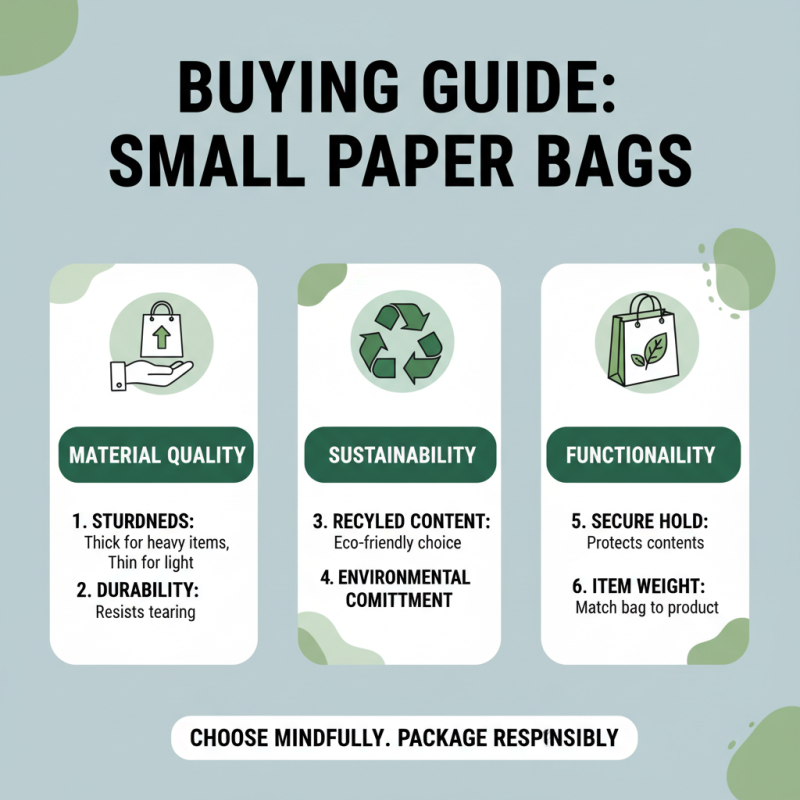
Buying Guide: Factors to Consider When Choosing Small Paper Bags
When choosing small paper bags, consider material quality first. They should be sturdy enough to hold items securely. Thicker paper can enhance durability, while lightweight options are best for smaller, less heavy products. Look for bags made from recycled materials for a sustainable choice. This reflects your commitment to the environment.
Size and dimensions matter significantly. Measure your products before selecting bag sizes. Small bags can easily become ineffective if they are either too big or too small. Furthermore, custom designs can add a personal touch, making your brand stand out. However, be cautious with designs that may distract from the product.
Think about the handles too. A comfortable handle can make a difference. You don't want your customers to struggle while carrying their purchases. Lastly, price plays a crucial role. Always balance cost with quality. Sometimes a cheaper bag may lead to disappointing results. Take the time to weigh these factors carefully.
Trends and Innovations in China's Small Paper Bag Industry
In recent years, the small paper bag industry in China has witnessed significant trends and innovations. With increased focus on sustainability, many manufacturers are exploring eco-friendly materials. Innovations in printing technology are also empowering brands to create unique designs. This allows them to stand out in a crowded market. Customization has become a vital part of the production process. Brands want bags that reflect their identity.
The rise of e-commerce has further fueled the demand for small paper bags. Online retailers require efficient packaging solutions. Consumers are drawn to aesthetically pleasing and functional bags. Yet, there can be challenges. Many manufacturers struggle with production consistency. Ensuring quality while meeting large orders can be difficult. Additionally, price competition often leads to compromises in material quality. This is a critical area needing attention. Brands must aim for a balance between cost and sustainability.
Top 10 Small Paper Bags in China You Need to Know
| Rank |
Material Type |
Size (cm) |
Weight Capacity (kg) |
Print Options |
Eco-Friendly |
| 1 |
Kraft Paper |
25 x 15 x 10 |
3 |
Flexographic, Digital |
Yes |
| 2 |
Recycled Paper |
20 x 10 x 8 |
2.5 |
Offset, Screen Printing |
Yes |
| 3 |
Coated Paper |
30 x 20 x 12 |
4 |
Digital, Die-cut |
No |
| 4 |
Brown Paper |
22 x 14 x 10 |
3.5 |
Flexographic |
Yes |
| 5 |
Art Paper |
28 x 18 x 12 |
4.5 |
Offset, UV Printing |
No |
| 6 |
White Kraft Paper |
24 x 16 x 9 |
3.2 |
Digital, Flexographic |
Yes |
| 7 |
Glossy Paper |
19 x 12 x 7 |
2 |
UV Printing |
No |
| 8 |
Matte Paper |
21 x 15 x 10 |
3 |
Flexographic |
Yes |
| 9 |
Heavyweight Paper |
27 x 19 x 11 |
Offset, Digital |
No |
| 10 |
Sustainable Paper |
23 x 15 x 10 |
3.5 |
Flexographic |
Yes |









 WeChat QR
 WhatsApp QR