How to Choose Paper Gift Bags for Your Business in 2026
Choosing Paper Gift Bags in 2026 is not just a matter of color and logo. The right bag must protect the product, carry comfortably, and represent your brand at the counter and beyond. A glossy finish may catch the eye. A weak handle may undo that impression.
The wider market is growing. Grand View Research estimated the global paper bags market at about US$5.6 billion in 2023 and projected continued growth through 2030. That figure covers paper bags broadly, not gift bags alone. Still, it signals rising commercial interest in paper packaging. For buyers, the useful questions are concrete: Does the bag fit the product without excess space? Can its twisted-paper or ribbon handles support the expected load? Does the paper weight suit a candle, a clothing purchase, or a boxed gift? Ask suppliers for samples, load tests, print proofs, and clear specifications. Then check consistency across repeat orders. Small details matter.
Circular-economy expert Dame Ellen MacArthur describes the goal this way: “A circular economy is based on the principles of designing out waste and pollution, keeping products and materials in use, and regenerating natural systems.” The Ellen MacArthur Foundation publishes this definition. It offers a helpful lens, though a paper bag is not automatically a sustainable choice. Material sourcing, coatings, reuse, and local recycling options all matter. And sometimes, the most attractive bag is simply oversized. This guide will help you compare Paper Gift Bags by strength, finish, customization, cost, and supplier reliability—before a beautiful sample becomes a disappointing bulk order.
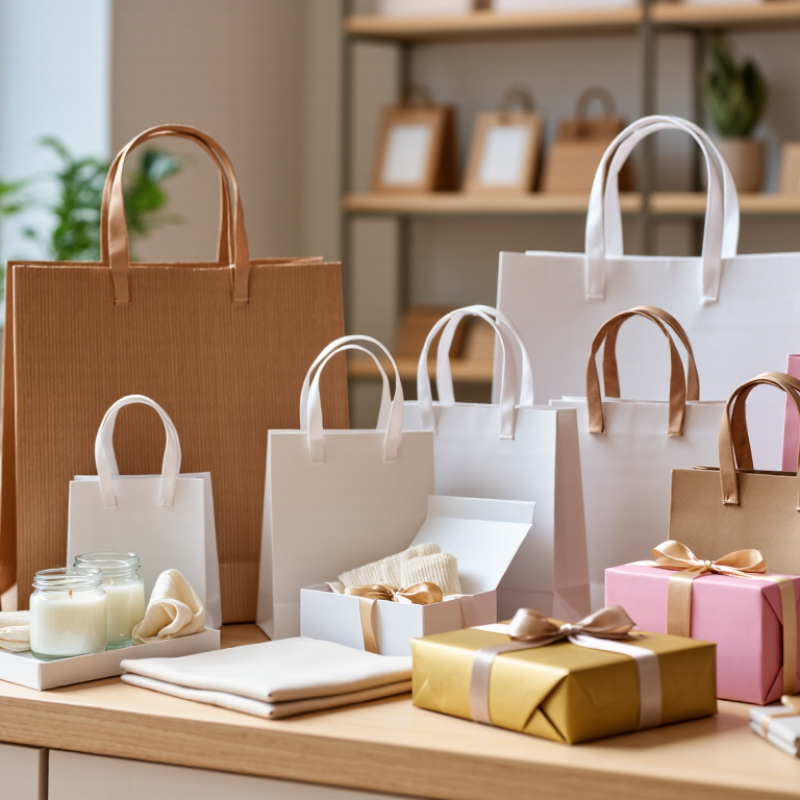
Define Your Business Needs and Gift Bag Use Cases
Before comparing paper gift bags, define who will carry them, what they will hold, and where they will be used. A jewelry shop needs compact bags with secure handles; a bakery may need wider bases and room for boxed treats. For corporate events, check whether bags must hold a welcome kit, a bottle, or several small items. Measure the heaviest typical load, not just the average one. Too-thin paper can crease or tear. Oversizing wastes storage and may make a small gift feel lost. Test a filled sample by lifting it, walking with it, and setting it down. A quick test helps.
Use cases also shape quantity, finish, and disposal choices. A retail counter may need several sizes, while a one-day event usually needs a fixed count and consistent appearance. The U.S. Census Bureau reported that e-commerce represented 16.1% of total U.S. retail sales in the fourth quarter of 2024; this points to online orders as a real channel, but does not predict gift-bag demand for any one business. EPA’s 2018 materials report put paper and paperboard recycling at 68.2%. That figure is a national average, not a promise that every bag will be recycled. Coatings, attached ribbons, and mixed materials can complicate sorting. Ask your local waste provider what it accepts. One detail is easy to miss: storage. Flat-packed bags need dry, clean space, and glossy finishes can show scuffs under bright shop lights. A small pilot order may reveal problems before a large purchase does.
How to Choose Paper Gift Bags for Your Business in 2026 - Define Your Business Needs and Gift Bag Use Cases
| Business need or use case |
Typical contents |
Indicative bag size (W × D × H) |
Material and handle considerations |
Useful buying checks |
| Small retail purchases |
Jewelry boxes, cosmetics, small accessories |
About 15 × 8 × 20 cm |
Light-to-medium-weight paper; flat or twisted paper handles for everyday carrying |
Check that the base fits the product packaging and that the handle attachment is reinforced. |
| Apparel and fashion gifting |
Folded shirts, scarves, boxed accessories |
About 25 × 12 × 30 cm |
Medium-weight paper; twisted paper or ribbon handles, depending on the desired presentation |
Measure the folded item or gift box, including tissue paper, before selecting a bag. |
| Food gifts and bakery items |
Packaged pastries, confectionery boxes, dry food gifts |
About 22 × 12 × 25 cm |
Use a bag suitable for the packaged product; paper alone is not a moisture or grease barrier |
Confirm food-contact suitability where relevant, and keep unwrapped food in appropriate inner packaging. |
| Premium or event gifts |
Gift boxes, guest favors, presentation kits |
About 30 × 15 × 35 cm |
Heavier paper can feel more substantial; rope or ribbon handles can suit presentation-focused use |
Request a printed sample to review color, finish, handle comfort, and the fit of the actual gift. |
| Books and flat products |
Books, stationery sets, flat gift boxes |
About 25 × 10 × 30 cm |
Choose a base depth that accommodates the product; reinforced bases help support heavier contents |
Check the product’s width, thickness, and weight; dimensions alone do not establish carrying capacity. |
| Take-home gifts and mixed orders |
Several small items or a combination of products |
About 32 × 16 × 35 cm |
Select paper weight and handle construction based on the combined load and expected handling |
Test a filled sample under realistic conditions; ask the supplier for load guidance for the exact bag construction. |
|
Planning note: Sizes are indicative examples, not fixed industry standards. Measure the packed product before ordering, and confirm paper specification, printing options, minimum order quantity, production lead time, and any applicable recycling or food-contact requirements with the supplier.
|
Compare Paper Types, Weights, and Durability
Choosing paper gift bags starts with the product’s weight and how customers will carry it. Kraft paper has a natural, uncoated feel and suits many everyday purchases. Recycled paper can offer a similar look, though its surface and strength vary by supplier. Coated paper gives colors a smoother finish, but coatings may affect recycling options in some areas.
Paper weight, measured in grams per square meter (gsm), is a useful comparison—not a load rating. Around 70–90 gsm may suit light items, while 100–140 gsm often feels sturdier for routine retail use. Heavier stock can feel more substantial. Still, a thick sheet cannot compensate for weak handle attachment or a poorly folded base. Small details matter. Check the handle joints, seams, and bottom folds.
Test samples with the actual products. Put a glass jar or boxed candle inside, then lift and carry the bag several times. Notice whether the base bows or the handles stretch. A wider, reinforced bottom may help bulky items sit flat. Keep in mind that moisture can soften paper, even when the bag feels strong in a dry shop. There is no perfect weight for every business; a heavier bag may be unnecessary for small, light goods. Test it first.
Choose Bag Sizes, Handles, and Functional Features
A paper gift bag should fit the item, not merely look generous on a shelf. Measure the product’s widest point, height, and depth, then allow room for tissue or protective wrapping. A candle jar may need a broad base, while a slim book usually sits better in a narrow bag. Check the usable interior dimensions; the handles and folded top can reduce space. Too much extra room can let products shift.
Choose handles according to weight and how customers will carry the bag. Twisted paper handles suit many lightweight purchases, while flat handles can feel comfortable against the hand. For heavier items, test the handle attachment with a filled sample. Test it loaded. A handle that feels sturdy when empty may loosen under strain. That detail is easy to overlook.
Consider functional features such as a reinforced base, side gussets, or a simple closure. Gussets help accommodate boxed goods, and a firm base can keep bottles upright on a short walk. If bags may sit near damp entryways, remember that paper can soften; no finish makes it immune to moisture. Try a sample with the actual product and wrapping. The first size you choose may be wrong, and that is useful information. Adjust after observing how the bag opens, carries, and holds its shape in real use.
Evaluate Branding, Customization, and Sustainability Options
Choosing paper gift bags in 2026 means balancing shelf appeal with credible sustainability claims. Start with the customer’s moment: a sturdy, warm-white bag with a quiet logo may suit a boutique, while a bright design can help seasonal gifts stand out. Test the actual bag under store lighting. Colors on a screen can mislead. Keep the logo readable at arm’s length, and check whether the handle feels secure with a realistic load.
Customization should serve a purpose, not just add decoration. Choose dimensions that fit common products, then consider one-color printing, recycled-content paper, or an uncoated finish. These choices can reduce visual clutter and simplify recycling, though local collection rules vary. The American Forest & Paper Association reported a 65–69% U.S. paper recovery rate for 2023. That is useful context, not a guarantee that every coated or mixed-material bag will be recovered. A glossy finish can look premium, but it may complicate disposal. Worth checking.
Tips: Ask suppliers for recycled-content documentation and material specifications. Request a sample, fold it, load it, and inspect the print. Separate removable ribbons or tags where practical, and avoid sustainability claims you cannot verify. A small test order can expose flaws before a large run.
Check Supplier Quality, Costs, and Delivery Requirements
Before comparing quotes, request a physical sample made with the paper weight, handle style, and printing method you plan to order. Check that the handles feel secure and the bottom stays flat under a realistic load. Look closely at folded edges, glue marks, and print alignment. A neat sample matters. Still, one sample cannot prove every bag will match; consider a small trial run before placing a large order.
Compare the full cost, not just the price per bag. Ask whether setup charges, shipping, protective packaging, and any artwork changes are included. A low quote may depend on a larger minimum order or thinner paper. Put each supplier’s assumptions in writing, then compare like with like. This step can feel tedious, and I have seen buyers rush it. That shortcut can become expensive.
Confirm when production begins, how long it takes, and whether delivery dates include transit time. Ask how the supplier handles delays and whether partial shipments are possible. If bags are needed for a seasonal launch, leave room for inspection and unexpected transit changes. Request tracking details and a named contact for order updates. Delivery promises sound reassuring, but a written schedule is more useful. Check a recent order reference if available, while remembering that past performance is not a guarantee.






 WeChat QR
 WhatsApp QR