What is a Paper Carrier Bag and its Benefits for Eco Friendly Shopping?
In today’s shopping landscape, the demand for eco-friendly alternatives is growing rapidly. Paper carrier bags are becoming increasingly popular among retailers and consumers alike. According to a report by Smithers Pira, the global market for paper bags is projected to reach $4.3 billion by 2026. This rise highlights the shift in consumer preferences towards sustainable options.
Paper carrier bags provide numerous benefits for eco-conscious shoppers. They are biodegradable and can be reused multiple times, unlike plastic bags. A study by the European Paper Bag Federation found that paper bags have a lower carbon footprint when produced sustainably. However, the production process still raises concerns. The extraction of trees for paper can contribute to deforestation if not managed properly.
Awareness around the importance of responsible sourcing is crucial. As consumers, we must consider the lifecycle of our shopping materials. While paper carrier bags are a step towards sustainability, it’s essential to reflect on their overall impact. Shoppers seek both convenience and environmental responsibility, making informed choices vital in this evolving market.

What is a Paper Carrier Bag?
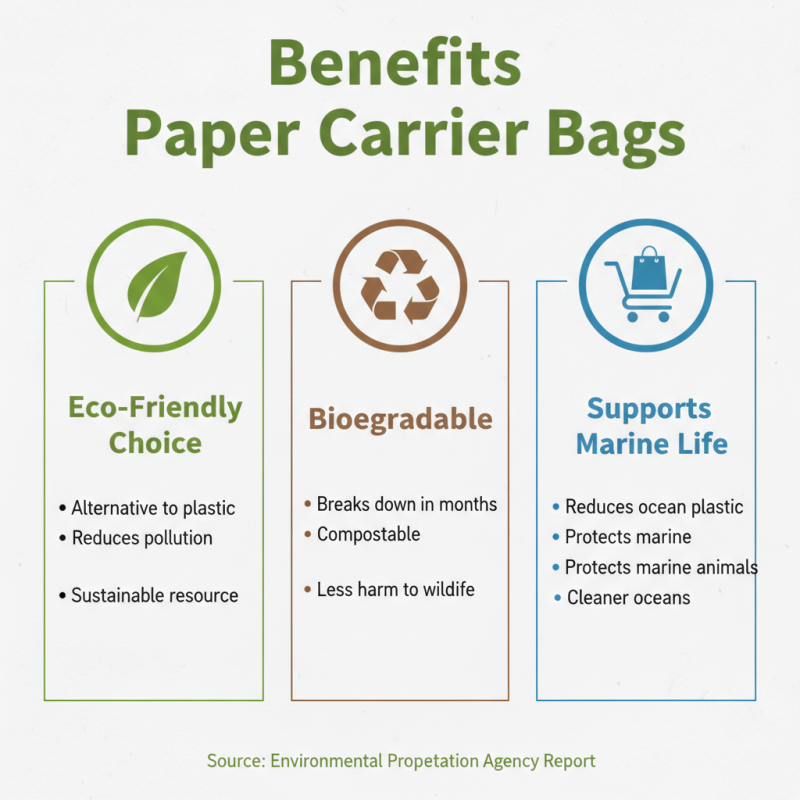
A paper carrier bag is a sustainable shopping alternative made from recycled paper. These bags are designed to replace plastic bags, minimizing environmental impact. According to the American Forest & Paper Association, paper bags are biodegradable and can decompose within a few months. This contrasts sharply with plastic bags, which can persist in landfills for hundreds of years.
One significant benefit of paper carrier bags is their strength. They can hold heavier items without tearing. A study by the European Bioplastics Association revealed that 60% of consumers prefer paper over plastic when considering eco-friendliness. However, it’s worth noting that the production of paper bags can require significant resources, including water and energy. While they may be biodegradable, the environmental cost of manufacturing them must be acknowledged.
In terms of recycling, paper bags have an advantage. They can be recycled multiple times. However, contamination with food or plastics can limit their recyclability. Some argue that the focus should also be on reducing consumption rather than simply switching bag types. While paper bags are a step in the right direction, it remains essential to consider a holistic approach to eco-friendly shopping.
History and Evolution of Paper Carrier Bags
The journey of paper carrier bags dates back to the 19th century. Their invention transformed shopping habits significantly. Before paper bags, shoppers relied on reusable cloth or simple baskets. These options were effective but not always convenient.
In the 1850s, a Swedish engineer created a machine that folded paper into bags. This design sparked a new era. Stores quickly adopted paper bags due to their lightweight and sturdy nature. By the 1920s, paper carrier bags became common in retail. They were favored over cloth because they were more affordable and easier to produce. Many began to appreciate the environmental edge they offered compared to plastic.
Tips for eco-friendly shopping include choosing bags with a recycling symbol. Always check if your bag is made from recycled materials. Remember, not all paper is created equal; some contribute to deforestation. Also, reusing bags often can cut down on waste. A paper carrier is an excellent choice, but mindful shopping practices matter too.
Paper Carrier Bags vs. Plastic Bags Usage in Eco Friendly Shopping
The above chart illustrates the usage trends of paper carrier bags versus plastic bags from 2020 to 2023. As awareness of eco-friendly shopping practices increases, the demand for paper bags has steadily risen, while the use of plastic bags has shown a declining trend.
Key Features of Eco-Friendly Paper Carrier Bags
Eco-friendly paper carrier bags are an excellent choice for sustainable shopping. These bags are often made from recycled materials, which reduces waste in landfills. According to industry reports, a shift to paper bags can reduce carbon footprint by up to 80%. This is a significant impact that eco-conscious consumers appreciate.
One of the key features of these bags is their biodegradability. Unlike plastic bags, which can take hundreds of years to decompose, paper bags break down quickly in the environment. Additionally, paper bags are robust and capable of carrying a substantial load, usually up to 10 grams, making them practical for everyday use.
Tips: When selecting paper bags, consider those made from recycled content. Look for options that have a higher percentage of post-consumer material. Also, remember to reuse these bags whenever possible. Smaller bags may not hold heavy items well, leading to tears and waste. Always check the weight limit before filling them up.
Benefits of Using Paper Carrier Bags for Shopping
Paper carrier bags are gaining popularity in eco-friendly shopping. They are an alternative to plastic bags, which are harmful to the environment. According to a report by the Environmental Protection Agency, plastic pollution affects marine life significantly. In contrast, paper bags are biodegradable. They break down in months, not centuries.
Using paper bags has several benefits. They are made from renewable resources, making them a more sustainable option. A study from the Paper and Paperboard Packaging Environmental Council estimates that about 70% of paper bags are recycled. This reduces waste and conserves natural resources. However, their production still has a carbon footprint. It’s essential to consider both sides.
The aesthetic appeal of paper bags also plays a role. They can be printed with vibrant designs, which attracts consumers. Many shoppers prefer their look to plastic. Yet, do they hold as much weight? Sometimes yes, sometimes no. It depends on the quality. Not every paper bag matches a plastic bag's durability, and that’s a flaw. Choosing the right bag is crucial for effective shopping.
Comparative Analysis: Paper Bags vs. Plastic Bags
Paper bags and plastic bags offer distinct environmental impacts. A study by the Danish Environmental Protection Agency found that paper bags can generate up to three times more greenhouse gas emissions than plastic bags over their entire life cycle. However, when considering their reuse, paper bags can become more eco-friendly. Using a paper bag multiple times can offset its initial environmental cost.
Plastic bags, on the other hand, are lightweight and can be reused, but they often end up in landfills and oceans. According to the United Nations, about 1 trillion plastic bags are used worldwide each year. These bags take hundreds of years to decompose. They pose a significant threat to wildlife and ecosystems.
Paper bags are biodegradable and can be recycled easily. They break down in a few months, adding nutrients back to the soil. Yet, their production is resource-intensive. It requires significant water and energy. Environmental groups suggest that while paper bags are an improvement, their overall impact still requires reflection. Shoppers need to weigh the benefits and drawbacks of both options.
There is no one-size-fits-all solution. Each choice comes with its own set of advantages and disadvantages. Making informed choices is vital in the journey toward sustainable shopping.



 WeChat QR
 WhatsApp QR