10 Essential Tips for Choosing the Right Paper Carrier Bags for Your Business
Choosing the right paper carrier bags for your business is crucial. These bags reflect your brand image and values. They impact customer experience directly. Various options exist in the market, and not all are equal.
Paper carrier bags come in different sizes, styles, and materials. Some may seem attractive but lack durability. Others may be sturdy but not environmentally friendly. Finding a balance can be challenging. You have to think about what works best for your products and customers.
It is important to reflect on your choices. How do these bags align with your sustainability goals? Are they practical for everyday use? Assessing these questions can lead you to the right decision. Paper carrier bags are not just about function; they’re about making a statement and fostering customer loyalty.
Understanding the Importance of Paper Carrier Bags for Businesses
In today’s sustainable market, paper carrier bags are critical for businesses. A recent study found that 74% of consumers prefer eco-friendly packaging. Using paper bags enhances a company’s image as environmentally responsible. Customers are more likely to support businesses that prioritize sustainability.
Moreover, the choice of paper carrier bags affects customer perception. Poor quality bags can lead to negative experiences. According to industry data, 60% of shoppers are less likely to return if their bags tear easily. Businesses must ensure durability while maintaining aesthetic appeal. This balance might be challenging, but it's essential for brand loyalty.
Many businesses overlook the importance of customization. Personalized bags create a memorable unboxing experience. About 40% of consumers remember brands by their packaging alone. Skipping thoughtful design could mean losing potential customers. Reflecting on these factors can lead to stronger connections with consumers.
Identifying Your Target Market and Their Preferences in Packaging
Identifying your target market is crucial for selecting the right paper carrier bags. According to a 2022 report by Smithers, 70% of consumers prefer eco-friendly packaging. This shows that sustainability is key. If your audience values environmental responsibility, opt for recycled paper products. They not only appeal to customers but also enhance your brand image.
Consider the demographics of your market. Younger consumers, particularly Millennials and Gen Z, gravitate towards stylish packaging. A study by Nielsen found that 64% of these age groups seek unique designs when shopping. Failing to account for these preferences could result in missed sales opportunities.
Furthermore, product type matters. A bakery might require sturdy bags with windows, while a clothing retailer may prioritize aesthetics. Surveys indicate that 45% of shoppers believe packaging influences their purchase decisions. If your bags are not visually appealing or practical, it could deter customers. Thus, reflecting on your market’s specific needs is vital for making informed choices.
10 Essential Tips for Choosing the Right Paper Carrier Bags
This chart illustrates the preferences of different target market segments concerning paper carrier bags. The data shows the importance of various features such as eco-friendliness, durability, design, and cost among customers.
Evaluating Different Types of Paper Carrier Bags Available
When choosing paper carrier bags, understanding the different types available is key. There are several styles to consider. Flat paper bags are simple and efficient. They are often used in retail environments. They can hold light items comfortably.
Another option is the gusseted paper bag. This design creates extra space. It can hold bulkier items and offers more versatility. These bags are excellent for food businesses or gift shops. Their expanded base allows for easy packing and stacking.
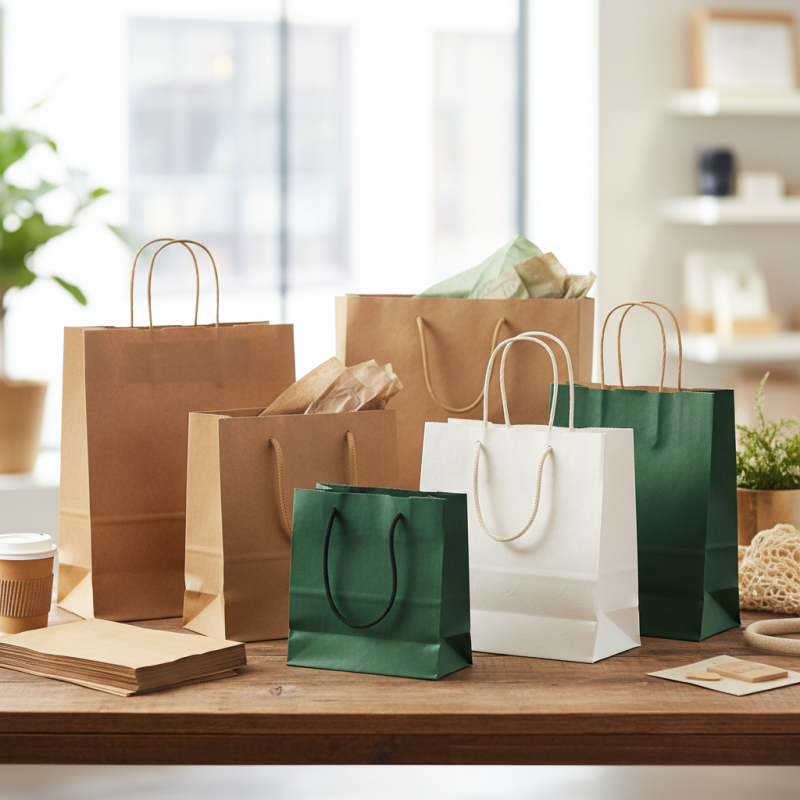
Kraft paper bags are popular for their durability and eco-friendliness. The thickness provides good support for a variety of products. However, they may not suit every aesthetic. Customers may have differing views on sustainability. It’s important to gauge your audience's preferences. Choosing the right type requires careful thought. Balancing functionality with appearance is often challenging. You may need to adjust your choices based on feedback. Always stay open to re-evaluating your selections.
Key Factors to Consider: Size, Strength, and Eco-Friendliness
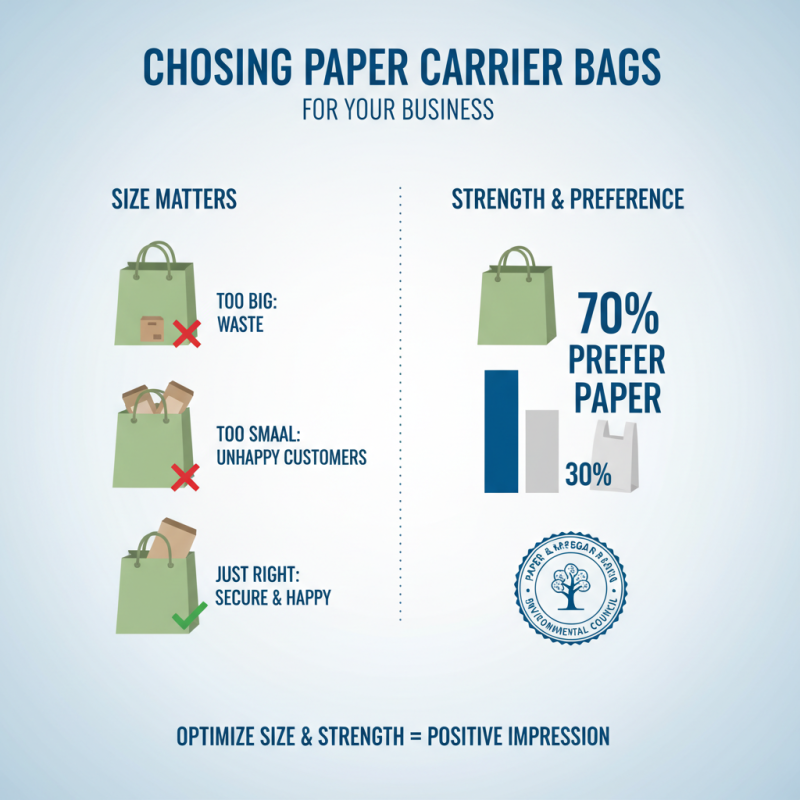
Choosing the right paper carrier bags for your business is crucial. Two key factors are size and strength. A report from the Paper and Paperboard Packaging Environmental Council states that nearly 70% of consumers prefer paper over plastic bags. The size should align with your product dimensions. Oversized bags waste materials, while small bags may lead to customer dissatisfaction. A proper fit ensures that items remain secure, enhancing the shopping experience.
Strength is another vital consideration. According to industry data, 40% of customers returned items due to weak packaging. Paper bags must hold up, especially for heavier goods. Investigate different paper weights and handle designs. Some businesses overlook this aspect, risking product damage and customer trust. Eco-friendliness is increasingly vital. A study from EcoFocus Worldwide shows that 75% of shoppers want sustainable options. Using recycled fibers can not only reduce environmental impact but also appeal to environmentally-conscious consumers. Every detail counts when selecting paper carrier bags.
Budgeting and Cost Considerations for Your Paper Carrier Bag Purchase
When selecting paper carrier bags, budgeting is critical. Understanding the costs involved helps prioritize quality and sustainability. In recent industry reports, 58% of businesses noted that investing in high-quality bags increased customer satisfaction. It’s clear that cheaper options often compromise durability and design.
Price variations can be significant. Basic paper bags may cost as little as $0.10 each, whereas eco-friendly variants can reach up to $0.50. However, a report from the Sustainable Packaging Coalition found that well-designed bags could boost brand perception by 34%. This makes the initial investment worthwhile. Many companies underestimate the value of marketing through quality packaging.
Additionally, factors such as customization add complexity. Custom printing elevates cost but enhances brand visibility. Businesses should evaluate their needs honestly. Do you want to stand out, or is cost the main concern? Finding the right balance is not always straightforward. The goal is to create a positive customer experience without overspending.
10 Essential Tips for Choosing the Right Paper Carrier Bags for Your Business - Budgeting and Cost Considerations for Your Paper Carrier Bag Purchase
| Tip Number |
Tip Description |
Estimated Cost |
Budget-Friendly Options |
| 1 |
Assess your branding needs |
$50 - $200 |
Standard designs |
| 2 |
Choose the right materials |
$30 - $150 |
Recycled paper options |
| 3 |
Calculate required sizes |
$20 - $100 |
Standard sizes available |
| 4 |
Consider print quality |
$100 - $250 |
Single color printing |
| 5 |
Think about the carrying handles |
$10 - $50 |
Flat or twisted handles |
| 6 |
Evaluate order quantity |
$200 - $1,000+ |
Bulk discounts |
| 7 |
Set a budget range |
$100 - $500 |
Affordable options |
| 8 |
Source from reliable suppliers |
N/A |
Trusted local vendors |
| 9 |
Research delivery options |
$20 - $100 |
Local pick-up discounts |
| 10 |
Factor in sustainability |
$50 - $300 |
Eco-friendly materials |



 WeChat QR
 WhatsApp QR