Leave Your Message

2026 Best Small Paper Bags for Wholesale Buyers?

Wholesale buyers entering 2026 need more than attractive packaging. They need dependable Small Paper Bags that protect products, support branding, and control operating costs. A bakery may need grease-resistant interiors. A boutique may prefer sturdy kraft paper with twisted handles. A takeaway counter may value quick packing and reliable sizing. Small details matter.

In my experience, a sample can look excellent and still fail during busy retail hours. A weak handle may tear after several uses. Excess moisture can soften an untreated bag. These issues are easy to miss. This guide examines paper weight, dimensions, handle strength, printing quality, and storage performance. It also considers supplier consistency, minimum order quantities, lead times, and clear product documentation. Buyers should request samples before confirming large shipments. Measurements should match real products, not only catalog photos.

Sustainability claims also require careful checking. Responsible suppliers should explain recycled content, fiber sources, coatings, and applicable certifications. Food-related applications may require additional compliance evidence. A lower unit price is not always the lower total cost. Rejected bags, damaged goods, and delayed replenishment can quickly change the calculation.

There is no perfect option. Some bags look premium but lack strength. Others perform well but limit creative printing. This comparison aims to make those trade-offs visible. It offers practical guidance for selecting Small Paper Bags that fit genuine wholesale needs, rather than chasing impressive claims alone.
2026 Best Small Paper Bags for Wholesale Buyers?

What Defines a Small Paper Bag for Wholesale Buyers in 2026

In 2026, a small paper bag is defined by its working capacity, not only its appearance. For wholesale buyers, typical formats hold jewelry, takeaway snacks, cosmetics, stationery, or small gifts. A practical starting size is 18 x 10 x 25 centimeters, but the product decides the final dimensions. Size is not enough. The gusset, opening, and base must match the item’s shape and weight. A narrow bottle needs a reinforced bottom. Flat goods may need less depth. This simple distinction prevents wasted cartons and customer complaints.

Material choice also defines quality. Kraft paper around 80 to 120 gsm suits many lightweight retail uses, while heavier goods need stronger paper or reinforcement. Recycled content can support a responsible purchasing policy, but buyers should request clear material data. “Eco-friendly” is too vague. Check fiber content, coating details, ink suitability, and available test records. For food-related packaging, confirm that the paper and printing system suit the intended contact conditions. Do not rely on a sample that looks perfect. Rub the surface, load the bag, and inspect the handle joints after repeated lifting.

Wholesale performance depends on consistency. Ask for tolerances on dimensions, paper weight, color, handle length, and packing quantity. A small mismatch across thousands of bags can affect shelf presentation and filling speed. Confirm carton size and moisture protection before approving production. Some buyers overlook storage conditions. Paper absorbs humidity. That detail can weaken the base before delivery. Early specifications are often too optimistic, especially when handles are tested only once. Better decisions come from samples used like real bags, not displayed like decorations.


Key Materials, Sizes, and Construction Options

2026 Best Small Paper Bags for Wholesale Buyers?

Key Materials, Sizes, and Construction Options

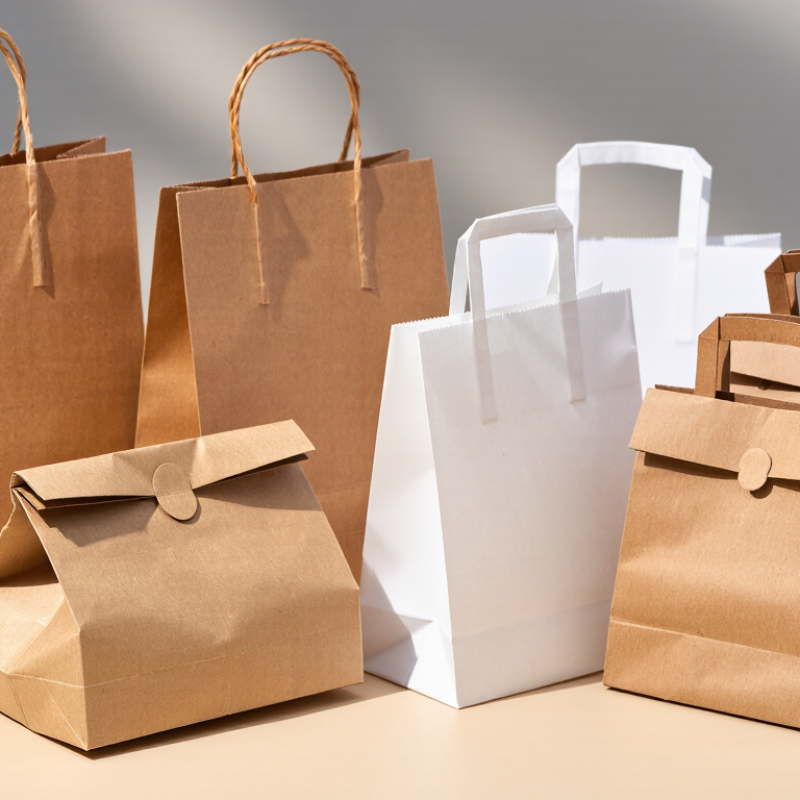
Small paper bags work best when their material matches the product weight and handling conditions. Kraft paper remains a practical choice for snacks, gifts, cosmetics, and takeaway items. Brown kraft gives a natural appearance, while bleached paper creates a cleaner printed surface. Recycled content can support sustainability goals, but its texture may vary between production batches. That detail deserves checking.

Common small sizes include 12 × 8 × 4 cm, 18 × 10 × 6 cm, and 22 × 12 × 8 cm. These dimensions suit jewelry boxes, sample products, candles, and compact food containers. However, internal measurements matter more than outside dimensions. A thick product can quickly reduce usable space. Requesting a physical sample prevents expensive sizing mistakes.

Construction affects both appearance and reliability. A folded bottom gives better stability than a simple flat base. Twisted paper handles feel comfortable, while flat handles can reduce material use and storage space. For heavier items, reinforced handle patches and a stronger bottom fold are worthwhile. I once underestimated handle stress during repeated carrying tests. The bag looked fine, but the attachment points weakened early. Wholesale buyers should test filled bags, stacked cartons, and short transport cycles before approving a large order. Resistant coatings may improve moisture protection, though they can reduce recyclability and change the paper’s natural feel.

How to Compare Strength, Capacity, and Product Protection

For wholesale buyers, a small paper bag must survive real handling, not just look neat. Compare paper weight, seam quality, handle attachment, and bottom construction. Basis weight alone can mislead. A 100 gsm bag may outperform a heavier bag with weak glued seams. The European Recovered Paper Council reported an 82.5% paper recycling rate in Europe in 2022. Recycled content matters, but moisture and fiber quality still affect performance. Test the actual bag, not only the specification sheet.

Capacity should match the product’s shape and weight. Measure internal width, gusset depth, and usable height. Then leave room around sharp corners and fragile surfaces. A bag holding 3 kilograms in a warehouse trial may fail after repeated carrying. Use controlled drop and compression checks, following relevant ISTA testing principles. For food or moisture-sensitive products, ask for Cobb water-absorption results and consider an approved inner barrier. Product protection is often overlooked.

Tips: Place a filled sample on a scale. Lift it by each handle. Check the base after ten minutes. Compare results across three production batches, because one sample can look perfect. Smithers’ paper packaging research highlights growing demand for recyclable formats, but sustainability claims should be supported by measurable fiber, coating, and recycling data. I still see buyers choosing the lowest unit price. That decision can create crushed corners, torn handles, and higher replacement costs. A modest strength upgrade may be wiser, although it should be verified through testing.

Sustainable Features and Customization Choices

For wholesale buyers, small paper bags now need more than a neat shape. They must show measurable sustainability.

Eurostat reported that EU residents generated 186.0 kilograms of packaging waste per person in 2022.

Paper remains useful because established collection systems can recover it.

CEPI reported an 82.5% paper recycling rate in Europe in 2023.

These figures support fiber-based packaging, but they do not excuse careless design.

Choose recycled or responsibly sourced kraft paper, matched to the product’s weight and moisture exposure.

A 70–100 gsm bag may suit lightweight gifts, while heavier goods need reinforced bases and twisted handles.

Avoid unnecessary plastic lamination.

Water-based inks and limited-color printing can simplify recovery, although “eco” ink claims still require supplier documentation.

Custom sizing also reduces empty space during shipping. That small adjustment can lower material use and freight volume.

Wholesale customization should include handle color, gusset depth, print coverage, and carton packing.

Ask for recycled content percentages, fiber certification, ink details, and test results.

A supplier who cannot provide these records creates avoidable risk.

Be careful with glossy coatings; they may improve appearance but complicate recycling.

Compostable coatings sound attractive, yet local processing access is often limited.

I would test samples under real conditions, including damp hands and repeated lifting.

Sustainability is not perfect here. Better choices still need evidence, not attractive wording.

Pricing, Suppliers, and Bulk Purchasing Considerations

In 2026, small paper bags remain practical for boutiques, bakeries, gifts, and takeaway counters. Wholesale pricing depends on paper weight, size, printing, handles, and order quantity. A plain kraft bag may cost less than a custom-printed bag, but freight can change the final price sharply. Request pricing at several volume levels, such as 1,000, 5,000, and 20,000 units. Compare landed cost, not only the factory quote.

Reliable suppliers should provide material specifications, production samples, carton dimensions, and realistic lead times. Ask whether recycled content is verified and whether the bag has suitable strength for your products. Check handle attachment, bottom-fold quality, and moisture resistance through simple testing. A supplier with the lowest price may create more waste through weak bags or uneven printing. That mistake is expensive. Still, premium specifications are not always necessary; a light bag may suit dry, lightweight items. Confirm payment terms, minimum order quantities, packaging details, and delivery responsibilities in writing. Leave room for delays. Forecasting is rarely perfect.

Tips: Order samples before bulk purchasing. Test a filled bag for 24 hours. Calculate storage space and import charges. Keep a backup supplier, but avoid splitting a small order too widely. Review prices quarterly, because paper and transport costs can move unexpectedly.